Table of Contents
ToggleA Whirlpool refrigerator that’s stopped cooling properly or developed a faulty ice maker doesn’t always mean it’s time for a thousand-dollar replacement. Most issues come down to a single worn component, and if you’re comfortable swapping out parts, you can handle the repair yourself for a fraction of the cost. Understanding which parts fail most often, how to order the exact match for your model, and what tools you’ll need keeps your fridge running without the service call markup. This guide walks through the core components, identification methods, and sourcing strategies homeowners need to tackle common Whirlpool refrigerator repairs with confidence.
Key Takeaways
- Most Whirlpool refrigerator problems stem from worn individual components like door gaskets, water inlet valves, and defrost timers—not catastrophic failures—making DIY repair possible for a fraction of replacement cost.
- Locate your fridge’s model and serial number plate inside the fresh-food compartment, then consult Whirlpool’s official parts diagram to identify the exact component and cross-reference part numbers before ordering.
- Water filters, ice maker assemblies, and door seals rank among the most frequently replaced Whirlpool refrigerator parts, with filters requiring replacement every six months under normal use.
- Essential DIY tools include a nut driver set, screwdrivers, needle-nose pliers, and safety gear like cut-resistant gloves and glasses; always unplug the unit and avoid working with refrigerant lines unless EPA-certified.
- Buy genuine Whirlpool replacement parts from the official Whirlpool store, authorized distributors like RepairClinic, or local appliance shops to ensure compatibility and warranty coverage over counterfeit marketplace alternatives.
- Stop repairs immediately and call a licensed technician if you detect ammonia odor or oily residue near the compressor, as refrigerant leaks require specialized EPA-certified handling.
Understanding Common Whirlpool Refrigerator Components
Whirlpool refrigerators share a modular design across most models, which simplifies part replacement once you know what you’re looking at. The compressor sits at the back or bottom and pressurizes refrigerant to cool the interior: it’s expensive to replace and usually requires a technician. The evaporator fan circulates cold air from the freezer to the fridge compartment, if one side stays warm, this fan or its motor often needs swapping.
Door gaskets (the rubber seals around the perimeter) prevent warm air infiltration. A torn or compressed gasket costs the compressor extra runtime and drives up energy bills. Thermostats and defrost timers regulate temperature cycles: when these fail, you’ll see constant running or frost buildup. The water inlet valve controls flow to the ice maker and dispenser, and a clog or electrical fault here stops ice production entirely.
Shelves, bins, and drawer slides are technically accessories but break frequently from weight or impact. Whirlpool refrigerator accessories like these are sold separately and vary by series (French-door, side-by-side, top-freezer). Recognizing these core systems helps you pinpoint which whirlpool parts refrigerator repairs demand first.
How to Identify the Right Parts for Your Whirlpool Model
Ordering the wrong part wastes time and return shipping, Whirlpool uses different component revisions even within the same product line. Start by locating the model and serial number plate, typically inside the fridge on the left or right wall, or on the ceiling of the fresh-food compartment. Write down both numbers exactly as printed: the serial number encodes manufacturing date and plant, which some suppliers use to cross-reference whirlpool refrigerator parts by serial number.
Next, consult a whirlpool refrigerator parts diagram for your model. Whirlpool’s official parts lookup (available on their support site) lets you enter the model number and view exploded diagrams showing every component with its part number. These diagrams label assemblies by zone, compressor section, door assemblies, ice maker module, so you can identify not just the broken piece but adjacent parts you might need (mounting brackets, screws, wire harnesses).
For door-related repairs, pull up a whirlpool refrigerator door parts diagram specifically. Door systems include hinges, cams, handles, dispensers, and gaskets, each with multiple SKUs depending on hinge side and finish. Side-by-side and French-door models have more complex door assemblies than top-freezer units, so double-check the diagram matches your configuration. If you’re uncertain, many appliance repair resources offer visual guides that match symptoms to parts.
Keep a whirlpool refrigerator parts list saved or printed during your research. Cross-reference part numbers on multiple sites, OEM numbers sometimes have superseding replacements that are cheaper or faster to ship.
Essential Tools and Safety Precautions for DIY Refrigerator Repair
Most whirlpool refrigerator replacement parts install with basic hand tools, but working around electrical components and refrigerant lines demands caution. Before touching anything, unplug the unit from the wall, never rely on the breaker alone. If the receptacle is hard to reach, turn off the dedicated circuit breaker and tape it in the off position so no one flips it mid-repair.
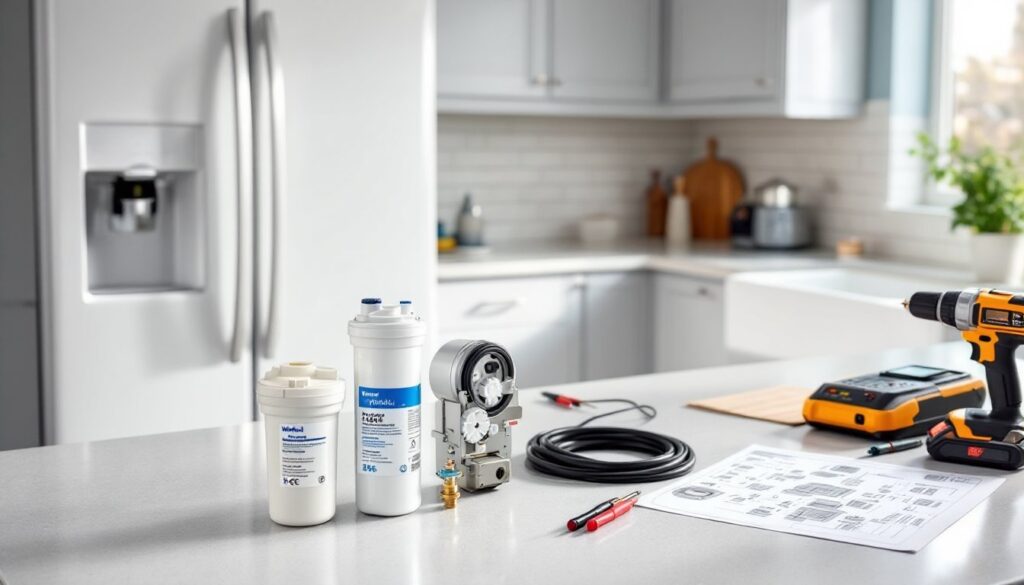
You’ll need a nut driver set (commonly 1/4″ and 5/16″), a Phillips and flathead screwdriver set, and needle-nose pliers for wire connectors. A cordless drill with a magnetic bit holder speeds up bracket removal. For door gasket work, keep a hairdryer or heat gun on low to soften adhesive without damaging plastic. A socket wrench set (metric and SAE) helps with compressor mounts or water-line fittings, though most DIYers won’t need to remove the compressor itself.
Safety gear: Wear cut-resistant gloves when handling sheet-metal panels or broken plastic with sharp edges. Safety glasses protect against spring-loaded clips that can pop loose under tension. If you’re diagnosing electrical issues with a multimeter, use insulated probe tips and never test live circuits unless you’re trained, most refrigerator components run on 120V AC, which can deliver a dangerous shock.
Clear a work area with good lighting and lay down cardboard to catch screws and clips. Pull the fridge away from the wall far enough to access the rear panel, but avoid kinking the water line if your model has an ice maker. If you smell ammonia or see oily residue near the compressor, stop and call a licensed technician, refrigerant leaks require EPA-certified handling and specialized equipment.
Most Frequently Replaced Whirlpool Refrigerator Parts
Certain components fail predictably due to wear cycles, water exposure, or material fatigue. Knowing which parts for a whirlpool refrigerator top the repair list helps you stock spares or budget for future fixes. Whirlpool side by side refrigerator parts and French-door models share many of these trouble spots, though top-freezer units see less ice-maker demand.
Water Filters and Ice Maker Components
Water filters (typically EveryDrop or compatible third-party cartridges) clog every six months under normal use and must be replaced to maintain flow and taste. A filter past its service life restricts pressure to the ice maker, causing small or hollow cubes. The ice maker assembly itself, motor, mold, ejector arm, fails after thousands of cycles, especially in hard-water areas where mineral buildup jams the mechanism. Some common refrigerator issues stem from a stuck ice maker that continuously calls for water, flooding the freezer.
The water inlet valve (mounted on the back panel) uses a solenoid to open and close: sediment clogs the screen or the solenoid coil burns out. Replacing it is straightforward, shut off the house water supply, disconnect the quarter-inch compression fitting, unbolt the valve, and reverse the process with the new part. Always check the water line tubing for kinks or cracks while you’re back there: a $5 nylon tube replacement beats a flooded kitchen.
Door Seals, Gaskets, and Shelving
Door gaskets lose elasticity over time, developing gaps that let cold air escape. Test yours by closing the door on a dollar bill, if it pulls out easily, the seal is shot. Whirlpool refrigerator door parts include magnetic-strip gaskets that snap into a retainer channel: warm the new gasket in sunlight or with a hairdryer before installation so it conforms to the door perimeter without wrinkles.
Whirlpool gold refrigerator parts and newer stainless models often use adjustable door bins with sliding mechanisms that crack under weight. Replacement bins and shelves are specific to each model year, so verify dimensions before ordering. Drawer slides and humidity-control covers in crisper compartments are high-wear items, if a drawer won’t close flush, check for broken slide tabs or bent rails. These small fixes prevent bigger problems: a misaligned drawer stresses the door gasket and compressor alike.
Defrost heaters and timers round out the frequent-flier list. When a defrost cycle fails, frost builds up on the evaporator coils, blocking airflow and warming the fridge. The heater element (a simple resistance wire) or the defrost timer can fail independently. Testing requires a multimeter to check continuity, if you’re not comfortable with electrical diagnostics, this is where you call in help. Reliability varies by model, but top refrigerator brands like Whirlpool generally have parts available for a decade or more post-manufacture.
Where to Buy Genuine Whirlpool Replacement Parts
Sourcing genuine whirlpool refrigerator replacement parts ensures fit and warranty coverage, but aftermarket options can save money if you’re willing to trade OEM backing for cost. Whirlpool’s direct parts store (accessible through their main website) stocks every part with exploded diagrams and installation PDFs. Prices run higher than third-party sellers, but you’re guaranteed compatibility and can bundle multiple items to save on shipping.
Appliance parts distributors like RepairClinic, PartSelect, and AppliancePartsPros carry genuine Whirlpool components alongside universal-fit alternatives. These sites let you search by model number and filter by part category (compressor, door, electrical, etc.). User reviews often flag fitment issues or quality differences, which is invaluable when choosing between OEM and aftermarket. Shipping typically runs two to five business days for in-stock items.
Local appliance repair shops sometimes sell parts over the counter at competitive markups, and you can inspect gaskets or shelves for correct sizing before buying. They’ll also tell you honestly if a repair is cost-effective or if the fridge is near end-of-life, useful perspective when a compressor replacement approaches half the price of a new unit.
Big-box home centers (Home Depot, Lowe’s) stock common filters, gaskets, and water lines but rarely carry model-specific assemblies like ice makers or control boards. They’re a good fallback for same-day needs if you can confirm the part number matches.
Avoid generic marketplace sellers without verified part numbers, counterfeit water filters and poorly cast plastic bins flood discount channels. Genuine parts carry Whirlpool branding and holographic labels when applicable. If a deal looks too cheap, it probably uses inferior materials that’ll fail early and leave you doing the job twice.