Table of Contents
ToggleCarpet cleaning machines and store-bought solutions can drain a budget fast, especially when tackling high-traffic areas or stubborn stains. A single bottle of commercial carpet shampoo typically runs $15–$30, and most contain synthetic fragrances and chemicals that linger long after the fibers dry. The good news? Effective homemade carpet cleaner solutions cost pennies per batch and rely on pantry staples that cut through dirt, grease, and odors without harsh additives. Whether someone’s spot-treating a wine spill or deep-cleaning an entire room with a rented machine, DIY carpet cleaner recipes deliver professional-grade results at a fraction of the price.
Key Takeaways
- Homemade carpet cleaner solutions cost just $2–$3 per gallon compared to $20–$40 for store-bought brands, delivering significant savings for regular deep-cleaning.
- The best all-purpose homemade carpet cleaner recipe combines white vinegar, dish soap, and hot water—ingredients that clean effectively without harsh chemical residues or synthetic fragrances.
- Pet stains require a specialized formula using hydrogen peroxide and baking soda to neutralize proteins and odors that standard cleaners miss, followed by thorough rinsing to prevent repeat accidents.
- Proper application technique—pre-vacuuming, testing in hidden spots, working in sections, and multiple extraction passes—is crucial for DIY carpet cleaner success and prevents over-wetting that causes mold.
- Natural fiber carpets like wool and silk need diluted vinegar solutions and careful pH management, while synthetic carpets tolerate standard homemade recipes across most residential installations.
- Renting a carpet shampooer and using homemade cleaner saves $150–$350 compared to professional cleaning services while delivering professional-grade results for routine maintenance and post-party cleanups.
Why Choose Homemade Carpet Cleaners Over Store-Bought Solutions
Commercial carpet shampoos pack in surfactants, optical brighteners, and preservatives that work, but they also leave residues that attract fresh dirt within days. Many formulas rely on sodium lauryl sulfate or quaternary ammonium compounds, which can irritate skin and respiratory systems, especially in households with kids or pets. Homemade carpet cleaner solutions sidestep these issues by using vinegar, baking soda, and mild dish soap, ingredients that rinse clean and don’t contribute to indoor air-quality concerns.
Cost savings add up quickly. A gallon of DIY carpet cleaner solution costs roughly $2–$3 to mix, compared to $20–$40 for a comparable volume of branded shampoo. For homeowners who rent carpet-cleaning machines twice a year or run a small upholstery business, that difference becomes significant. DIY recipes also give full control over scent and strength: swap essential oils in and out, dial up degreasing power for high-traffic hallways, or dilute for delicate wool blends.
Another advantage is transparency. Store-bought labels often list “proprietary blends” without breaking down concentrations or pH levels. A homemade carpet cleaner recipe uses ingredients anyone can pronounce and measure. That clarity matters when treating antique rugs, natural fibers, or carpets under warranty that prohibit certain chemicals. Mixing at home also eliminates single-use plastic jugs, an eco-friendly bonus that aligns with waste-reduction goals.
Essential Ingredients for DIY Carpet Cleaning
Building an effective carpet cleaner solution diy starts with four core ingredients, each serving a distinct role. White distilled vinegar (5% acetic acid) breaks down alkaline stains, neutralizes odors, and acts as a natural disinfectant. Always use white vinegar, apple cider or balsamic varieties leave sticky residues and can stain light-colored fibers. For most recipes, a ratio of one part vinegar to two parts water strikes the right balance between cleaning power and fiber safety.
Baking soda (sodium bicarbonate) functions as a mild abrasive and deodorizer. It lifts embedded dirt from carpet pile and absorbs moisture, making it ideal for pre-treating damp stains or refreshing high-traffic zones. Some homeowners sprinkle baking soda dry, vacuum after fifteen minutes, then follow with liquid cleaner: others dissolve it directly into the solution. Either approach works, just avoid over-saturating carpets, which can lead to mold growth in the padding underneath.
Liquid dish soap provides surfactant action that emulsifies grease and oils. Choose a clear, dye-free formula without added moisturizers or antibacterial agents, which can leave a film. A single tablespoon per gallon of solution is plenty: more soap creates excess suds that carpet machines struggle to extract, leaving sticky residues that attract dirt. Dawn Original and Seventh Generation Free & Clear are reliable picks, though any unscented dish liquid will do.
Hydrogen peroxide (3% solution) serves as an optional oxygen bleach for organic stains, blood, urine, wine. It’s gentler than chlorine bleach and won’t strip color from most synthetic carpets, but always test on an inconspicuous spot first. Natural fibers like wool or silk can yellow under peroxide, so stick to vinegar-based recipes for delicate materials. Essential oils (lavender, tea tree, lemon) add fragrance and mild antimicrobial properties, but they’re purely optional: skip them if anyone in the household has scent sensitivities.
The Best All-Purpose Homemade Carpet Cleaner Recipe
This workhorse formula handles everyday grime, tracked-in mud, and general dullness across most carpet types. It’s compatible with portable extractors, full-size carpet shampooers, and manual scrub brushes. For a one-gallon batch suitable for a standard Bissell or Hoover machine reservoir:
• 2 cups hot water (not boiling, aim for 140–160°F to help dissolve soap)
• 2 tablespoons white distilled vinegar
• 1 tablespoon clear liquid dish soap
• Optional: 10 drops essential oil (lavender or lemon work well)
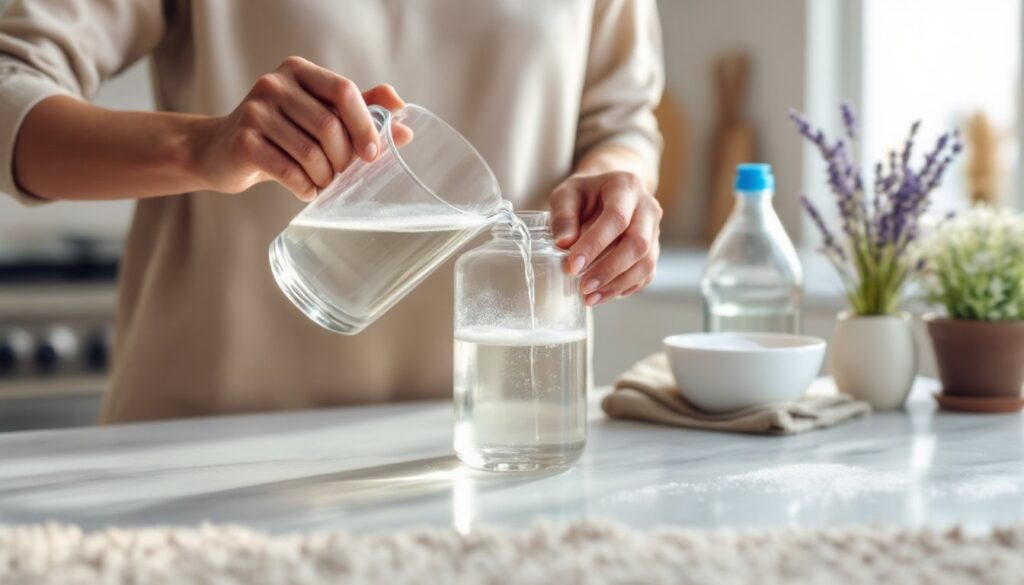
Combine ingredients in a clean gallon jug, cap tightly, and shake gently to blend. The solution will look slightly cloudy, that’s normal. Pour into the machine’s clean-solution tank, filling the remainder with plain warm water to reach the fill line. This dilution prevents over-soaping, which is the number-one cause of sticky, re-soiling carpets.
For spot cleaning without a machine, halve the recipe and transfer it to a spray bottle. Mist the stained area lightly, don’t drench it, then blot with a clean microfiber cloth. Work from the outside of the stain toward the center to prevent spreading. Rinse by misting with plain water and blotting again. Avoid scrubbing in circles, which can fray carpet fibers and distort the pile.
This DIY carpet cleaner solution works on nylon, polyester, and olefin (polypropylene) carpets, which make up the majority of residential installations. For natural fibers like wool, sisal, or jute, reduce vinegar to one tablespoon per gallon and test in a hidden corner first. Wool is particularly pH-sensitive: too much acid can weaken fibers or shift dye lots. When in doubt, consult the carpet manufacturer’s care tag or stick to professional cleaning for high-value rugs.
Safety note: Wear nitrile gloves if hands are sensitive, and ensure the room is well-ventilated. Open windows or run a fan to speed drying time, damp carpets left closed up for more than 24 hours risk mildew growth in the padding.
Targeted DIY Solutions for Specific Carpet Stains
General-purpose recipes handle most messes, but stubborn or specialized stains call for tweaked formulas. The key is matching the cleaner’s chemistry to the stain type, proteins, tannins, oils, and dyes each respond to different treatments.
Pet Stains and Odors
Urine, vomit, and feces contain proteins and bacteria that standard soap-and-vinegar blends won’t fully neutralize. For a homemade carpet cleaner for machine use targeting pet accidents, mix:
• 1 cup hydrogen peroxide (3%)
• 1 cup warm water
• 2 tablespoons baking soda
• 1 teaspoon clear dish soap
Blot up as much liquid as possible with paper towels before applying cleaner. Pour the solution directly onto the stain, let it sit for five to ten minutes, then blot or extract with a machine. The peroxide oxidizes odor-causing compounds, while baking soda absorbs lingering moisture. For set-in odors, sprinkle dry baking soda over the treated area, leave overnight, and vacuum thoroughly the next morning.
Enzyme-based additives (available at pet-supply stores) can be stirred into this recipe for extra punch, though they’re not strictly necessary for fresh stains. Avoid ammonia-based cleaners entirely, they mimic the scent of urine and may encourage pets to re-mark the spot. Multiple cleaning hacks for pet owners emphasize the importance of thorough rinsing to prevent residue buildup that attracts repeat accidents.
Wine, Coffee, and Food Spills
Tannin-based stains (red wine, coffee, tea, berries) require quick action and a slightly acidic cleaner. This carpet cleaner homemade recipe works well for fresh spills:
• 1 cup club soda or sparkling water (the carbonation helps lift stains)
• 1 tablespoon white vinegar
• ½ tablespoon dish soap
Blot the spill immediately, don’t rub. Pour a small amount of the solution onto the stain, let it fizz for 30 seconds, then blot with a clean white cloth. Repeat until the stain lifts. For dried wine or coffee, lightly dampen the area with plain water first to rehydrate the stain, then apply the cleaner.
Greasy food spills (butter, salad dressing, pizza drippings) need extra degreasing power. Add an extra half-tablespoon of dish soap to the all-purpose recipe and work the solution into the fibers with a soft-bristle brush. Blot thoroughly and rinse with plain water to remove soap residue. Experts at Good Housekeeping have tested similar formulas and found that dish soap’s surfactants outperform many store-bought degreasers on carpet fibers.
How to Apply Homemade Carpet Cleaner Effectively
Even the best homemade carpet cleaner solution for machine use won’t deliver results if applied incorrectly. Proper technique matters as much as the recipe itself, especially when using rental or consumer-grade extractors that lack the suction power of truck-mounted systems.
Pre-vacuum thoroughly. Remove loose dirt, pet hair, and debris before introducing any liquid. A clogged vacuum or carpet full of grit will turn into mud once moisture hits, making the problem worse. For high-traffic areas, vacuum twice in perpendicular directions to lift matted fibers.
Test in a hidden spot. Even gentle DIY solutions can react unpredictably with certain dyes or carpet backings. Apply a small amount of cleaner in a closet corner or under furniture, wait ten minutes, then blot with a white cloth. If color transfers or the texture changes, dilute the recipe further or switch to professional cleaning.
Work in sections. Divide the room into 4×4-foot grids and clean one at a time. Overlap each pass slightly to avoid streaking. Most carpet-cleaning machines use a two-step process: a forward pass releases cleaning solution, and a slow backward pull extracts dirty water. Make two or three slow backward passes per section to pull out as much moisture as possible. Over-wetting can damage carpet backing, promote mold, and extend drying time to 24–48 hours.
Rinse if using a machine. After cleaning the entire area with the DIY solution, refill the tank with plain warm water and make one final extraction pass over the carpet. This step removes any soap or vinegar residue that might attract dirt. Skip this on low-pile commercial carpets, which dry quickly, but always rinse plush residential styles.
Speed drying with airflow. Open windows, turn on ceiling fans, or aim box fans across the carpet surface. Dehumidifiers help in humid climates. Avoid walking on the carpet until it’s completely dry, damp fibers pick up dirt from socks and shoes instantly. Professional-grade air movers (available at tool-rental shops for around $15/day) cut drying time in half and prevent that musty smell that signals mildew growth.
Groom the pile. Once dry, vacuum again to lift flattened fibers and restore texture. For shag or frieze carpets, a carpet rake (a tool with plastic teeth on a long handle) works wonders. This final step also picks up any loosened dirt that the extractor missed.
For particularly stubborn stains or wall-to-wall deep cleaning, a rented carpet shampooer paired with homemade carpet cleaner for shampooer recipes saves hundreds compared to hiring pros. Expect to pay $30–$50 per day for a machine rental versus $200–$400 for professional service on a typical living room and hallway. The results won’t match a truck-mounted steam system’s power, but for routine maintenance or post-party cleanups, DIY methods hold their own. Interior decorating and cleaning guides often recommend quarterly deep-cleaning for high-traffic homes, which makes the cost savings of homemade solutions especially appealing.
Safety reminders: Never mix vinegar with bleach, it produces toxic chlorine gas. Store leftover solution in a clearly labeled container away from children and pets. If someone has asthma or chemical sensitivities, open windows during cleaning and consider running a HEPA air purifier while the carpet dries. Dispose of dirty extraction water down a utility sink or toilet, not outside, it may contain pet waste, bacteria, or cleaning agents that harm landscaping.