Table of Contents
ToggleFisher & Paykel dishwashers have earned a reputation in the appliance world for doing things differently, and better. The New Zealand brand challenges the conventional top-loading dishwasher with innovations like drawer-style designs that fit modern kitchens and lifestyles. Homeowners shopping for a dishwasher often face choice paralysis: stainless tub or plastic, third rack or not, quiet operation or budget-friendly. Fisher Paykel dishwashers cut through the noise by focusing on flexibility, water efficiency, and real-world usability. Whether you’re renovating a galley kitchen or outfitting a new build, understanding what sets these machines apart can help you choose the right model and keep it running for years.
Key Takeaways
- Fisher Paykel dishwashers feature innovative drawer-style designs that reduce bending, enable independent wash cycles, and save water by using as little as 2.5 gallons per cycle compared to 6+ gallons for older models.
- The flagship DD24DDFTX9N double-drawer model offers two independent wash zones for flexible cleaning, while the single-drawer DD24SAX9N fits tight spaces and costs less, making Fisher Paykel options ideal for different household sizes and kitchen layouts.
- Installation requires a dedicated 120V, 15-amp GFCI-protected circuit and proper plumbing connections with a high loop or air gap; DIY swaps are manageable but first-time installs are best handled by professionals.
- Regular maintenance—cleaning filters monthly, inspecting spray arms quarterly, descaling every six months, and checking drain hoses annually—extends the lifespan of your Fisher Paykel dishwasher to 12-15 years.
- A Fisher Paykel dishwasher delivers the best value for households generating 6-14 place settings daily and prioritizing water efficiency and ergonomics, though upfront costs ($1,600-$2,300 all-in) are offset by long-term savings and durability.
What Makes Fisher Paykel Dishwashers Stand Out?
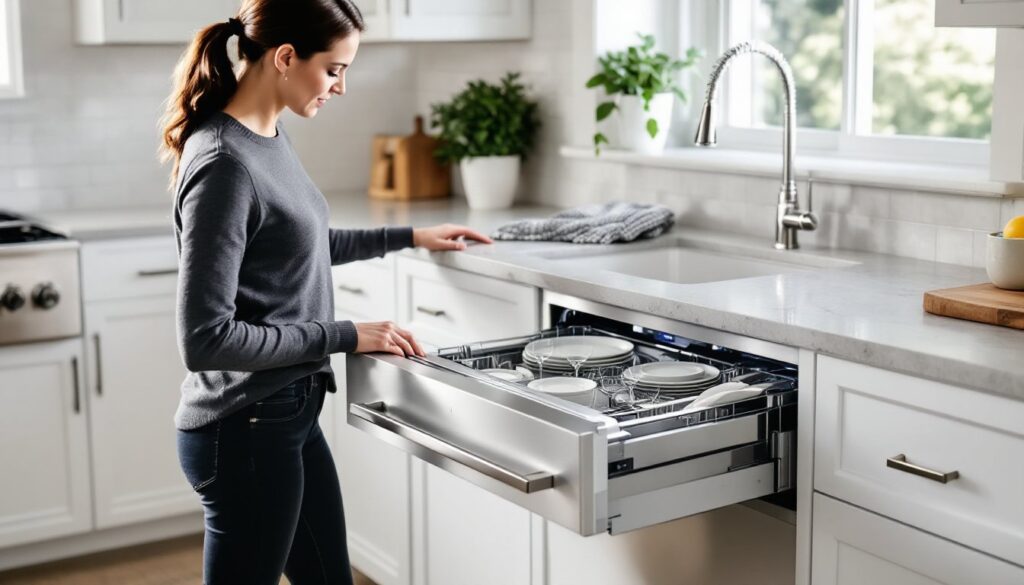
Drawer-style innovation is the headline feature. Unlike traditional dishwashers that swing open from the front, Fisher and Paykel dishwasher units use pull-out drawers, either single or double. This design lets you run smaller loads without wasting water, or operate two independent wash zones with different cycles running simultaneously. It’s practical for households that don’t generate enough dishes for a full load daily, and it saves bending down to load the bottom rack.
Water efficiency is another strong suit. Most Fisher Paykel dishwasher drawers use as little as 2.5 gallons per cycle, which meets or exceeds ENERGY STAR requirements. Compare that to older conventional models that can chug 6+ gallons, and the savings add up over the appliance’s lifespan, especially in drought-prone regions or homes on well water.
Quiet operation matters if your kitchen opens into a living space. Fisher & Paykel models typically run between 42 and 47 decibels, comparable to a library whisper. That’s quieter than many budget brands, which can hit 55+ dB and disrupt conversations or TV time.
Flexible rack configurations accommodate odd-shaped items. Adjustable tines, fold-down shelves, and dedicated cutlery trays (not baskets) mean you can fit sheet pans, mixing bowls, and tall stemware without Tetris-level frustration. The brand designs for real kitchens, not just standardized place settings.
Top Fisher Paykel Dishwasher Models for 2026
For 2026, three models stand out for different use cases:
DD24DDFTX9N (Double DishDrawer): This is the flagship. Two independent drawers, each holding seven place settings. You can run a delicate cycle on top for wine glasses while the bottom tackles baked-on casserole dishes. Stainless steel interior, knock-to-pause feature, and nine wash cycles including a sanitize option. It’s overkill for a couple, but ideal for families or frequent entertainers. The Fisher and Paykel double drawer dishwasher often appears on expert-tested appliance lists for its flexibility.
DD24SAX9N (Single DishDrawer): Half the size, half the price, same tech. This single-drawer unit fits under a 24-inch counter or can be installed as a bar/prep sink dishwasher in a secondary kitchen or basement kitchenette. It’s popular in tiny homes, ADUs, and apartment renovations where space is tight. Holds six place settings and uses about 3 gallons per cycle.
RF610ADUSX5 (Traditional Front-Load): Fisher & Paykel also makes conventional models for those who prefer them. This 24-inch unit offers 15 place settings, a third rack for utensils, and ADA-compliant height. It competes directly with Bosch and Miele in the mid-premium tier but comes in slightly cheaper.
Drawer Dishwashers vs. Traditional Models
Space and ergonomics: Drawer dishwasher Fisher Paykel units reduce bending. The top drawer loads at waist height, which matters for aging-in-place designs or anyone with mobility concerns. Traditional models require crouching to reach the lower rack, which can strain backs over time.
Capacity trade-offs: A Fisher paykel drawer dishwasher (double) maxes out at 14 place settings total, split across two drawers. A traditional front-loader can fit 15-16 place settings in one tub. If you routinely cook for large groups, the conventional format might be more efficient.
Installation footprint: Fisher paykel dishwasher drawers measure 24 inches wide (standard), but the double-drawer units are taller, roughly 34 inches versus 32 inches for traditional models. Confirm your cabinet opening height before ordering. Some older kitchens need a countertop lift to accommodate the extra 2 inches.
Cost per load: Drawer models cost more upfront, $1,200 to $2,000 for a double drawer versus $600 to $1,000 for a comparable traditional unit. But water savings and the ability to run half-loads without waste can offset that premium over 10+ years of use.
Installation and Setup: What Homeowners Need to Know
Electrical requirements: Fisher & Paykel dishwashers require a dedicated 120V, 15-amp circuit. Per NEC (National Electrical Code), the dishwasher must be GFCI-protected if installed within six feet of a sink. Most modern kitchens already have this: older homes may need an electrician to add a GFCI breaker or outlet. Budget $150-$300 for electrical upgrades if needed.
Plumbing connections: You’ll need a 3/8-inch compression fitting hot water supply line and a drain hose that connects to the sink’s tailpiece or garbage disposal. The drain hose must form a high loop or use an air gap to prevent backflow, check your local plumbing code. Some jurisdictions require an air gap: others allow the high-loop method. Fisher Paykel drawer dishwashers include a 6-foot drain hose and 5-foot supply line: longer runs need extension kits.
Cabinet prep: The unit mounts to the underside of the countertop using brackets included in the box. For Paykel and Fisher dishwasher drawer models, ensure your cabinet opening is exactly 24 inches wide and at least 34.5 inches tall (for double drawers). Shim the unit level front-to-back and side-to-side before securing, an unlevel dishwasher won’t drain properly and can cause door alignment issues.
Permit requirements: Most jurisdictions don’t require a permit for a like-for-like dishwasher replacement. If you’re adding a dishwasher where none existed, or running new electrical or plumbing, you’ll likely need permits for both trades. Call your local building department before starting work. Inspectors check for proper GFCI protection and code-compliant drain installation.
DIY vs. pro install: Swapping an existing dishwasher is a manageable DIY project if you’re comfortable with basic plumbing and electrical connections. First-time installs or tight spaces (like integrating a drawer unit into custom cabinetry) are better left to pros. Expect to pay $150-$250 for professional installation if the rough-ins are already in place.
Maintenance Tips to Maximize Your Dishwasher’s Lifespan
Clean the filter monthly. Fisher and Paykel dishwasher models use a removable stainless steel micro-filter at the bottom of each drawer. Twist counterclockwise to remove, rinse under hot water, and use a soft brush to clear trapped food particles. A clogged filter reduces wash performance and can cause drainage issues. Set a phone reminder, it takes 60 seconds.
Inspect spray arms quarterly. Food debris can clog the tiny jets. Remove the arms (they lift straight up on most models) and use a toothpick to clear blocked holes. Run a rinse cycle after reassembly to flush out loosened particles.
Descale every six months if you have hard water. Mineral buildup on heating elements and interior surfaces reduces efficiency. Use a commercial dishwasher descaler (Finish or Affresh brands work well) or run an empty cycle with two cups of white vinegar on the hottest setting. Don’t use vinegar more than twice a year, acid can degrade rubber seals over time.
Wipe door seals weekly. Crumbs and grease accumulate in the rubber gasket around the drawer opening. A damp microfiber cloth removes buildup and prevents mold. Pay extra attention to the bottom seal, where water pools after cycles.
Check the drain hose annually. Pull the dishwasher out (turn off water and power first) and inspect the drain hose for kinks or clogs. A kinked hose causes standing water, which leads to odors and eventually pump failure. Also verify the high loop is still secure, it can sag over time if not properly clipped to the cabinet.
Use the right detergent. Fisher & Paykel recommends powder or liquid detergent over pods for drawer models. Pods sometimes don’t dissolve fully in short cycles, leaving residue. If you prefer pods, use the heavy cycle to ensure complete dissolving. Skip the rinse aid if you have soft water, it can cause clouding on glassware.
Common Issues and DIY Troubleshooting Solutions
Dishes not getting clean: Nine times out of ten, this is a clogged filter or spray arm. Pull both, clean them, and try again. If the problem persists, check your water heater, dishwashers need incoming water at 120°F minimum to activate detergent properly. Also confirm you’re loading correctly: plates should face the center, not block the spray arms.
Water pooling in the bottom: First, check the drain filter, remove and rinse it. If water still pools, the drain hose may be kinked or the drain pump clogged. Access the pump by removing the filter assembly and using a flashlight to look for debris (broken glass, fruit pits, twist ties). Wear gloves, sharp objects are common culprits. If the pump is clear, the issue may be a faulty drain solenoid: that’s a pro repair.
Dishwasher won’t start: Verify the drawer is fully closed, Fisher Paykel units have a magnetic latch that must engage. If the control panel lights up but nothing happens when you press start, the door latch switch may be stuck. Gently press and release the latch a few times. Still nothing? Check your home’s breaker box: GFCI outlets can trip without obvious cause. Reset the GFCI and try again.
Error codes on display: Fisher & Paykel uses alphanumeric codes. A1 means the unit can’t fill with water, check that the supply valve under the sink is open and the inlet screen isn’t clogged with sediment. F1 indicates a drainage problem (see water pooling fixes above). U1 means the drawer isn’t latching properly, inspect the latch for obstructions or damage. The user manual lists all codes: download a PDF from the Fisher & Paykel support site if you’ve lost your paper copy.
Unusual noises: A grinding sound during the wash cycle often means a hard object (bone, toothpick, bottle cap) is caught in the pump. Stop the cycle, remove the filter, and check the pump cavity. A humming noise without water flow suggests a jammed pump motor, power off and manually spin the impeller with your finger. If it’s seized, the motor needs replacement (around $200 parts + labor).
Safety note: Always disconnect power at the breaker before accessing internal components like the pump or heating element. Standing water can conduct electricity if the unit is still energized. Wear safety glasses when inspecting the pump, trapped debris can release suddenly.
Is a Fisher Paykel Dishwasher Worth the Investment?
For most homeowners, yes, but with caveats. The drawer dishwasher Fisher Paykel design excels in small households, multigenerational homes, and kitchens where counter space trumps capacity. If you live alone or with one other person, a single drawer saves water and counter space compared to running half-empty traditional loads. Families with kids might find the double drawer’s zone flexibility worth the premium, especially when comparing tested models against conventional alternatives.
Cost considerations: Entry-level models start around $800 (single drawer), but the popular double-drawer units run $1,400-$2,000. Add installation, and you’re looking at $1,600-$2,300 all-in. That’s 30-50% more than a mid-range Whirlpool or GE. The payback comes through water savings (roughly $40-$60/year in utility costs) and longer lifespan, Fisher & Paykel units average 12-15 years versus 9-11 for budget brands.
Repair parts availability: Fisher & Paykel is a premium brand with fewer service centers than big-box names. Parts are readily available online, but local appliance repair shops may charge diagnostic fees if they’re unfamiliar with the brand. Extended warranties (typically $150-$250 for five years) can provide peace of mind if you’re not a DIY troubleshooter.
Alternative uses: The single-drawer models shine in unconventional installs, bar areas, outdoor kitchens, in-law suites, or even RVs with residential-style buildouts. If you’re designing a flexible kitchen layout, the compact footprint lets you maximize workspace without sacrificing dish-cleaning capability.
Bottom line: If your household generates 6-14 place settings of dishes daily, values water efficiency, and can budget for the upfront cost, a Fisher Paykel dishwasher delivers. If you regularly host large gatherings or need to wash oversized cookware (stock pots, roasting pans), a traditional 16-place-setting model may serve you better. Match the tool to the job, not the other way around.