Table of Contents
ToggleBuying a used refrigerator can save you anywhere from 40% to 70% off retail price, enough to cover a month’s groceries or fund another home upgrade. Whether you’re outfitting a rental property, replacing an appliance that died overnight, or just want to cut costs on your kitchen remodel, the secondhand appliance market in 2026 offers solid options if you know where to look and what to check. This guide walks you through finding quality used refrigerators near you, inspecting them properly, and avoiding the duds that’ll leave you stuck with a warm box and a repair bill.
Key Takeaways
- A used refrigerator for sale can cost 40–70% less than new models, with quality options available for $150–$600 depending on size and brand.
- Check door seals, listen for unusual noises, verify cold temperatures (37°F for fridge, 0°F for freezer), and inspect for rust or damage before purchasing a used refrigerator.
- Facebook Marketplace, Craigslist, local appliance stores, and Habitat for Humanity ReStores are reliable sources for finding quality used refrigerators in your area.
- Transport used refrigerators upright and let them sit unplugged for 2–4 hours after delivery before plugging in to prevent compressor oil damage.
- Negotiate price based on comparable listings and condition issues, and always request a bill of sale documenting the model number, date, and price for private transactions.
Why Buying a Used Refrigerator Makes Financial Sense
New refrigerators range from $800 for basic top-freezer models to $3,000+ for French-door units with smart features. A used refrigerator in good condition typically costs $150–$600, depending on size, brand, and age. That’s real money back in your pocket.
Appliances depreciate fast. A refrigerator loses roughly 20–30% of its value the moment it leaves the showroom floor, similar to driving a new car off the lot. After three to five years, depreciation slows, meaning you can snag a gently used unit that still has 8–12 years of life left (most fridges last 10–15 years total) for a fraction of the original price.
Beyond savings, buying used keeps appliances out of landfills. The EPA estimates that around 9 million refrigerators are disposed of annually in the U.S., many still functional. Choosing a secondhand fridge reduces manufacturing demand and the environmental cost of producing new steel, plastic, and refrigerants.
You’ll also dodge the “latest model” premium. Manufacturers refresh lineups every year with minor tweaks, Wi-Fi connectivity, LED touch panels, slightly different shelf layouts. These features add cost but don’t improve core performance. A used refrigerator for sale from 2021 or 2022 will keep your food just as cold as a 2026 model, minus the markup.
Where to Find Quality Used Refrigerators in Your Area
Online Marketplaces and Classified Platforms
Facebook Marketplace and Craigslist dominate the local used appliance scene. Search “used refrigerator near me” or “use refrigerator for sale” (a common typo that yields extra listings) to pull up options within 25–50 miles. Filter by price, size, and posting date.
Look for detailed listings with multiple photos showing the interior, door seals, and back coils. Sellers who include the model number and purchase year are usually more serious, you can cross-reference specs and recall history. Avoid one-photo posts with vague descriptions like “works fine” and no contact info beyond a phone number.
OfferUp and Nextdoor are also worth checking. Nextdoor connects you with neighbors, which can mean easier pickup and a bit more accountability. You’re less likely to get ghosted when the seller lives three blocks away.
For higher-end models, browse eBay Local Pickup or Mercari. These platforms have buyer protections, though local pickup still requires in-person inspection. When searching, try variations like “used refrigerator sale” to catch sellers who didn’t optimize their listing titles.
Local Appliance Stores and Outlet Centers
Many independent appliance stores sell floor models, returns, and trade-ins alongside new inventory. These used refrigerators often come with a 30- to 90-day warranty, something you won’t get from a Craigslist deal. Ask if they deliver and haul away your old unit: bundled service can offset a slightly higher price.
Scratch-and-dent outlets (run by chains like Lowe’s, Home Depot, or regional dealers) offer open-box and lightly damaged new models at steep discounts, plus occasional trade-ins. A dent on the side panel doesn’t affect cooling performance, and you’re still getting a relatively new appliance with manufacturer specs.
Habitat for Humanity ReStores and similar nonprofit resale shops accept donated appliances. Prices are low ($100–$300), and proceeds support housing programs. Inventory turns over fast, so call ahead or visit weekly. Appliances are sold as-is with no warranty, but many home appliance donations come from remodels and still have years of life left.
Estate sales and moving sales (advertised on EstateSales.net or local classifieds) can yield great finds. Sellers motivated by a deadline often price to move, and you can inspect the fridge in its original setting, useful for gauging how it was maintained.
What to Inspect Before You Buy a Pre-Owned Fridge
Bring a tape measure, a flashlight, and a small level. Measure the exterior dimensions and compare them to your space, don’t forget to add clearance for door swing and ventilation (most manufacturers recommend 1–2 inches on each side and top).
Plug the unit in if possible, or ask the seller to run it for at least 30 minutes before you arrive. Open the doors and feel for cold air. Freezer compartments should reach 0°F: the fridge should hover around 37°F. If the seller can’t demonstrate it’s running, walk away, “it was working yesterday” is a red flag.
Check the door seals (also called gaskets). Close a dollar bill in the door: if you can pull it out easily, the seal is worn and cold air is escaping. Replacing gaskets costs $50–$150 in parts and labor, so factor that in.
Inspect the interior for cracks, rust, or heavy staining. Light discoloration is normal, but rust or cracked shelving indicates poor maintenance or water damage. Pull out the crisper drawers and check the tracks and humidity controls.
Look at the back coils (if accessible). Dusty coils are fine, they just need a quick vacuum, but if you see oil residue or bent fins, the compressor or refrigerant lines may be compromised. That’s a costly repair and a deal-breaker.
Ask for the model and serial number, usually found on a sticker inside the fridge or on the back panel. Google “[brand] [model] recall” to check for safety issues. The CPSC database is also searchable. Some older models have known compressor failures or fire hazards.
Listen for unusual noises. All fridges hum and click occasionally, but loud grinding, rattling, or constant running suggests a failing compressor or fan motor. Kitchen appliance diagnostics can help identify specific sounds, but trust your gut, if it sounds off, it probably is.
Test the ice maker and water dispenser if present. These features break often and are expensive to fix. If they don’t work and you don’t care, use that as a negotiating point.
Finally, check the energy guide label (yellow sticker) if still attached. Fridges made before 2014 can cost $100+ per year to run: newer models average $50–$70. A cheap, inefficient fridge may cost more in electricity over five years than buying a newer used model upfront.
Negotiating Price and Arranging Safe Delivery
Research comparable listings before making an offer. If similar models in your area are listed at $300–$400, a seller asking $500 has room to move. Point out specific issues, worn seals, cosmetic damage, missing shelves, to justify a lower price. Most private sellers expect negotiation.
Cash talks. Offering to pay immediately and pick up same-day can knock 10–20% off the asking price, especially if the seller needs it gone quickly.
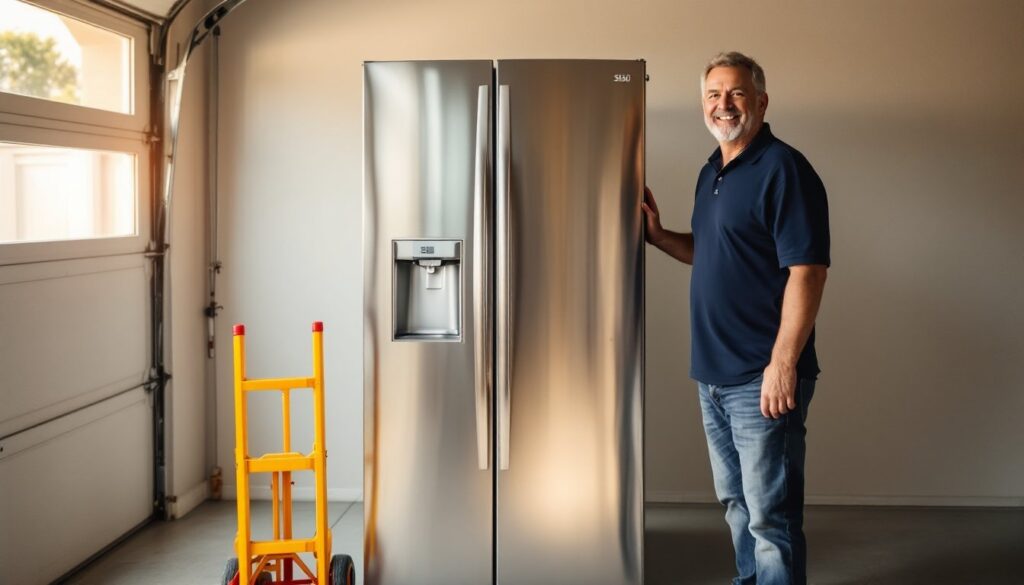
For delivery, refrigerators are heavy (200–350 lbs) and awkward. Rent an appliance dolly from Home Depot or U-Haul for $15/day. If you’re hiring movers, expect $75–$150 for local transport. Secure the doors with bungee cords or rope during transit to prevent them from swinging open and damaging the hinges.
Never lay a refrigerator flat. Transport it upright or tilted no more than 45 degrees. Laying it down can cause compressor oil to flow into the refrigerant lines, leading to cooling failure. If you must tilt it, let it stand upright for 24 hours before plugging it in.
Before moving a used fridge into your home, measure doorways, hallways, and stairwells. Standard refrigerator widths range from 28 to 36 inches, but French-door models can exceed 36 inches. Remove doors if needed, most detach with a wrench and 10 minutes of work.
Once inside, let the fridge sit unplugged for 2–4 hours to let the compressor oil settle, especially if it was transported at an angle. Clean the interior with a 1:1 vinegar-water solution before loading food. Replace the water filter if it has one (universal filters cost $20–$40 online).
If buying from a store with a warranty, read the fine print. Some cover parts but not labor: others exclude cosmetic issues or pre-existing damage. For private sales, consider asking the seller to sign a simple bill of sale with the date, price, model number, and an “as-is” clause, it won’t give you legal recourse, but it documents the transaction.
Conclusion
Buying a used refrigerator near you is straightforward if you inspect carefully, negotiate fairly, and move it correctly. You’ll save hundreds of dollars without sacrificing functionality, and with smart home upgrades becoming more common, you can always add external temperature monitors or smart plugs to an older unit. Check seals, listen for odd noises, verify it runs cold, and you’ll walk away with an appliance that keeps your food fresh for years to come.