Table of Contents
ToggleMost people vacuum regularly, but few think about what’s happening inside the machine until suction drops or dust starts blowing back into the room. The culprit? Clogged or worn-out filters. Shark vacuum filters do more than trap dust, they protect your motor, improve air quality, and keep your floors actually clean. If you’re noticing weaker performance or musty smells, your filters are probably overdue for attention. This guide walks through everything you need to know about shark vacuum filter maintenance, replacement timing, and where to find the right parts without guesswork.
Key Takeaways
- Shark vacuum filters protect your motor, capture allergens, and maintain suction power—clogged filters force motors to work harder and reduce air quality in your home.
- Clean foam and felt filters monthly by rinsing under cold water and air-drying for 24 hours, while washable HEPA filters need the same care, and non-washable HEPA filters should be tapped clean every 2 weeks.
- Replace shark vacuum filters when foam loses shape or develops tears, felt becomes thin, HEPA filters appear discolored, or suction doesn’t improve after cleaning—typically every 12 months for HEPA filters.
- Buy replacement shark vacuum filters directly from SharkClean’s official website for guaranteed OEM compatibility, or from Amazon, Walmart, and Target for wider selection and faster delivery options.
- Third-party filters cost 30-50% less than OEM options but verify HEPA certification to ensure they meet the 99.97% filtration standard your model requires.
- Stock up on filters during sales events since they don’t expire when stored dry, and consider future Shark models with washable HEPA filters to eliminate long-term replacement costs.
Why Shark Vacuum Filters Matter for Your Home
Filters aren’t optional accessories, they’re the core of your vacuum’s function. A shark vacuum cleaner filter serves three critical roles: protecting the motor from debris, capturing allergens before they recirculate, and maintaining consistent suction power.
When filters get clogged with pet hair, dust mites, and fine particles, airflow drops. Your motor works harder to compensate, shortening its lifespan and hiking energy use. You’ll notice the vacuum sounds louder or runs hotter than usual. That’s the motor straining against restricted airflow.
Dirty filters also affect indoor air quality. Homes with pets, allergies, or high dust accumulation rely on proper filtration to keep particulates out of breathing zones. A compromised filter lets allergens escape back into the room you just cleaned, defeating the purpose entirely.
Regular maintenance extends both filter and motor life. Shark vacuums typically use multiple filter stages, and each one needs attention. Skip this step and you’re looking at premature motor failure or replacement costs that far exceed a $15 filter pack. Most manufacturers void warranties if filter neglect causes damage, so keeping up with cleaning and replacement schedules protects your investment.
Types of Shark Vacuum Filters Explained
Shark vacuums use layered filtration systems, and understanding each type helps you maintain them properly. Most models combine foam and felt filters with HEPA filters for multi-stage cleaning.
Foam and Felt Filters
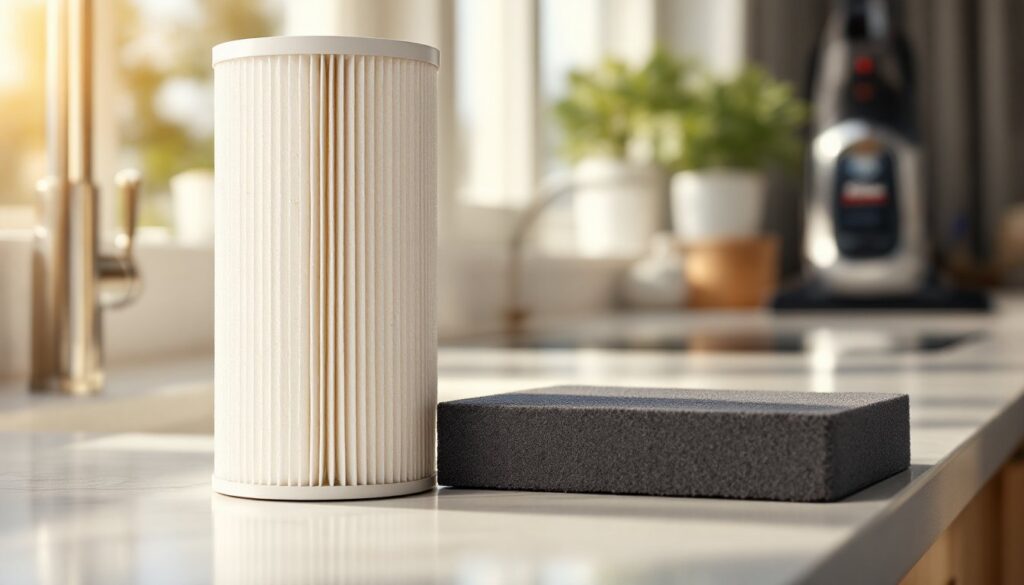
Foam filters sit at the pre-motor stage, catching larger particles before they reach the motor housing. They’re washable and designed for repeated use. Felt filters, sometimes layered with foam, trap finer dust that escapes the foam layer.
These filters are typically located near the dust cup or under the motor cover. They’re dense enough to block debris but porous enough to allow airflow. Most Shark models include two foam filters and one felt filter per unit.
You’ll need to rinse foam and felt filters monthly under cold tap water (no soap). Squeeze gently to remove trapped dirt, then air-dry completely, 24 hours minimum. Installing a damp filter invites mold growth and motor damage. If the foam tears or loses its shape, replace it. Worn foam filters can’t seal properly, letting dust bypass the filtration system entirely.
HEPA Filters
HEPA (High-Efficiency Particulate Air) filters capture 99.97% of particles as small as 0.3 microns, including pollen, mold spores, and pet dander. They’re the final filtration stage before air exits the vacuum.
Shark HEPA filters are usually white or blue cylindrical units mounted post-motor. Unlike foam filters, most HEPA filters aren’t washable. Water damages the fiber matrix that traps microscopic particles. Some newer Shark models feature washable HEPA filters, but check your manual first.
For washable HEPA filters, rinse monthly and air-dry for 24 hours. For non-washable versions, tap them gently over a trash can every few weeks to dislodge surface dust. Replace them annually or when visibly discolored, whichever comes first. Homes with pets or heavy use may need replacements every 6-8 months. Independent testing by cleaning experts confirms that proper HEPA maintenance significantly impacts allergen capture rates.
How to Clean and Maintain Your Shark Vacuum Filters
Cleaning filters isn’t complicated, but doing it wrong can ruin them. Here’s the step-by-step process that works across most Shark models.
Tools and Materials:
- Cold tap water
- Clean towel or drying rack
- Trash can
- Optional: soft brush for stubborn debris
Step-by-Step Cleaning Process:
-
Power off and unplug the vacuum. Safety first, never work on a plugged-in appliance.
-
Remove the dust cup. Press the release button (usually on the handle or canister body) and empty contents into the trash.
-
Locate all filters. Most Shark vacuums have 2-3 filters: foam and felt filters near the dust cup, and a HEPA filter near the motor housing. Consult your manual if you’re unsure, filter locations vary by model.
-
Tap out loose debris. Before washing, shake or tap filters over a trash can to remove surface dust. This prevents clogging your sink.
-
Rinse under cold water. Hold foam and felt filters under a gentle stream. Squeeze repeatedly until water runs clear. Do not use soap, detergent, or hot water, these break down foam structure and leave residues that restrict airflow.
-
Air-dry completely. Place filters on a clean towel or drying rack in a well-ventilated area. This takes 24-48 hours depending on humidity. Damp filters cause mold and motor corrosion.
-
Check for damage. Before reinstalling, inspect for tears, compression, or distortion. Damaged filters should be replaced immediately.
Safety Note: Always wear disposable gloves if you have allergies or sensitivities. Filter cleaning releases trapped allergens into the air.
Maintenance Frequency:
- Foam and felt filters: rinse monthly or every 4-6 uses
- HEPA filters (washable): rinse monthly
- HEPA filters (non-washable): tap clean every 2 weeks
Pet owners and those in dusty climates should clean filters more frequently. If suction drops noticeably between cleanings, increase your maintenance schedule.
When to Replace vs. Clean Your Filters
Knowing when to clean versus replace saves money and prevents performance issues. Here’s how to tell the difference.
Replace Foam and Felt Filters When:
- Foam shows visible tears, holes, or crumbling edges
- Felt material becomes thin or develops gaps
- Filters no longer return to original shape after washing
- Persistent odors remain after cleaning and drying
- They’ve been washed 10-12 times (roughly 12 months of use)
Foam compresses over time, reducing its ability to seal against the housing. Gaps let unfiltered air (and debris) reach the motor.
Replace HEPA Filters When:
- The filter appears gray, brown, or heavily discolored
- Suction doesn’t improve after cleaning foam filters
- You notice musty or burning smells during operation
- It’s been 12 months since installation (even if it looks clean)
- Manufacturer recommends replacement (some models specify non-washable HEPA filters)
Non-washable HEPA filters degrade internally even when the exterior looks intact. The fiber matrix collapses with use, reducing filtration efficiency below the 99.97% standard.
Warning Signs You Need Immediate Replacement:
- Loss of suction that doesn’t improve after cleaning all filters and emptying the dust cup
- Dust blowing out of exhaust vents during use
- Motor overheating or auto-shutoff triggering frequently
- Visible damage like cracks, warping, or detached seals
If your vacuum is under warranty, check whether using non-OEM filters voids coverage. Some manufacturers require branded filters to maintain warranty protection. That said, third-party filters often match OEM specs at lower prices, just verify they meet HEPA standards if your model originally included HEPA filtration.
Where to Buy Replacement Shark Vacuum Filters
Finding the right shark vacuum replacement filters depends on your model number, budget, and how quickly you need them. Here’s where to look and what to watch for.
Direct from Shark:
The official SharkClean website guarantees OEM parts that match your model exactly. Enter your vacuum’s model number (usually on a sticker under the dust cup or motor housing) to find compatible filters. Prices run $10-$25 per filter set. Shipping takes 5-7 business days unless you pay for expedited delivery.
Major Retailers:
- Amazon: Widest selection of both OEM and third-party options. Filter packs range from $8-$30. Prime members get 2-day shipping. Read reviews carefully, some third-party filters don’t fit as advertised.
- Walmart and Target: Carry common Shark filter models in-store and online. Prices match Amazon closely. In-store pickup lets you get filters same-day.
- Home Depot and Lowe’s: Stock filters for popular Shark models in the vacuum aisle. Helpful if you need filters immediately and want to see packaging before buying.
- Bed Bath & Beyond: Carries Shark parts, though selection is smaller than big-box competitors.
Third-Party Options:
Brands like Crucial Vacuum and Hongfa manufacture aftermarket filters at 30-50% lower cost than OEM. Quality varies, look for products explicitly marked as HEPA-certified if your model requires it. Non-certified “HEPA-style” filters don’t meet the 99.97% filtration standard.
What to Check Before Buying:
- Model compatibility: Shark uses different filter designs across product lines. A filter for the Navigator won’t fit a Rocket. Cross-reference your model number with product listings.
- Filter type: Verify whether you need foam, felt, HEPA, or a combination pack. Buying the wrong type means a wasted trip or return shipping.
- Washable vs. disposable: Some replacement listings don’t specify clearly. Washable filters cost more upfront but last longer.
- Quantity: Filter packs usually include 2-4 pieces. Calculate cost per filter to compare deals accurately.
Money-Saving Tip: Buy filter packs in bulk during sales events (Black Friday, Prime Day). Filters have no expiration date if stored in a dry place. Stocking up when prices drop cuts long-term maintenance costs. For a comprehensive guide to filter replacement, consult product-specific recommendations based on your model’s requirements.
If you’re shopping for a new Shark vacuum entirely, consider models with washable HEPA filters to reduce ongoing filter costs. Newer Shark models increasingly feature lifetime washable filters that eliminate replacement expenses.