Table of Contents
ToggleA single flea can lay up to 50 eggs per day, and most of those eggs don’t stay on your pet, they fall into your grass, mulch, and garden beds. Within weeks, your yard becomes a breeding ground that reinfects dogs and cats every time they step outside. Yard flea treatment isn’t optional if you’ve got pets or have noticed bites on yourself after mowing the lawn. It’s the frontline defense that breaks the flea lifecycle before it reaches your home. This guide walks through the best flea treatment for yard applications, from pet-safe natural options to heavy-duty chemical solutions, plus a clear step-by-step process to apply them correctly and prevent re-infestation.
Key Takeaways
- Flea treatment for yard is essential because fleas lay up to 50 eggs per day in soil and organic debris, creating a breeding ground that continuously reinfects pets.
- Chemical insecticides (permethrin, bifenthrin) provide the fastest knockdown, while natural options like diatomaceous earth and beneficial nematodes offer pet-safe alternatives with longer reapplication intervals.
- Effective flea and tick yard treatment requires mowing to 2–3 inches, clearing debris, treating shaded moist areas, and maintaining a 2–4 hour re-entry interval for safety.
- Follow-up treatments every 21–28 days are necessary to eliminate newly emerged fleas; monitor results using white socks 3–5 days after application.
- Long-term flea prevention combines habitat modification (reducing moisture and vegetation density), wildlife exclusion, consistent pet preventatives, and proactive off-season treatments in high-risk areas.
Why Your Yard Needs Flea Treatment
Fleas thrive in shaded, moist areas with temperatures between 65°F and 80°F. If your property has overgrown grass, leaf litter, or spots where pets lounge, you’re providing ideal flea habitat. Adult fleas live on animals, but their eggs, larvae, and pupae develop outdoors in soil and organic debris.
Without treatment, a minor flea problem escalates fast. Flea larvae feed on organic matter and adult flea feces (which contains undigested blood), maturing into pupae that can remain dormant for months until vibrations or carbon dioxide signals a host is nearby. Indoor flea treatments won’t solve the issue if your yard keeps reintroducing new generations.
Yard flea and tick treatment also addresses ticks, which share similar habitat preferences. Both pests pose health risks, fleas transmit tapeworms and cause allergic dermatitis, while ticks carry Lyme disease and Rocky Mountain spotted fever. Treating your yard reduces the vector population and protects both pets and people.
Key indicators your yard needs treatment:
- Pets scratch excessively after outdoor time
- Flea dirt (tiny black specks) visible on pet bedding or favorite outdoor spots
- Bites on human ankles or lower legs after yard work
- Wildlife (opossums, raccoons, feral cats) frequent your property, depositing fleas as they pass through
Best Flea Treatment Methods for Your Yard
Natural and Chemical Treatment Options
Chemical insecticides provide the fastest knockdown and longest residual protection. Look for products containing permethrin, bifenthrin, or carbaryl. These are synthetic pyrethroids that disrupt flea nervous systems, killing adults, larvae, and eggs on contact. Coverage rates typically range from 4,000 to 6,000 square feet per gallon of concentrate.
Chemical treatments work well for severe infestations, but require careful application. Most flea and tick yard treatments recommend keeping pets and children off treated areas for 2 to 4 hours until surfaces dry. Always check the product label for re-entry intervals.
Natural alternatives include diatomaceous earth (DE), nematodes, and cedar oil sprays. Food-grade DE is a fine powder made from fossilized algae: it punctures flea exoskeletons, causing dehydration. Apply a light dusting to dry soil, mulch, and under decks. Reapply after rain.
Beneficial nematodes (Steinernema carpocapsae) are microscopic worms that parasitize flea larvae in soil. They’re sold as a powder or sponge that you mix with water and spray. Nematodes need moist soil and temperatures above 55°F to survive. Results take 7 to 14 days but offer season-long suppression if conditions stay favorable.
Cedar oil disrupts flea pheromones and has a repellent effect. It’s a flea and tick yard treatment safe for pets once dry, but requires reapplication every 2 to 3 weeks and doesn’t provide the residual control of synthetic options.
Combination approach: Many homeowners get best results using a chemical treatment for initial knockdown, then maintaining with natural methods and habitat management.
Professional vs. DIY Yard Flea Control
DIY flea treatment in yard scenarios works well for properties under 10,000 square feet with mild to moderate infestations. You’ll need:
- Pump sprayer (1- to 4-gallon capacity) or hose-end sprayer
- Protective gear: gloves, long sleeves, safety glasses, and closed-toe boots
- Insecticide concentrate or granular product
- Measuring cup for accurate dilution
DIY advantages include cost savings (typically $30 to $80 per application for materials) and the ability to retreat on your own schedule. Most yard flea treatments require reapplication every 3 to 4 weeks during warm months.
Professional pest control makes sense for:
- Properties larger than half an acre
- Severe infestations with multiple pest species (fleas, ticks, chiggers)
- Complex landscapes with extensive plantings, water features, or sensitive ecosystems
- Homeowners uncomfortable handling concentrated insecticides
Professionals use commercial-grade products with higher active ingredient concentrations and have access to restricted-use formulations. They also provide treatment records required by some HOAs or for real estate transactions. Expect to pay $75 to $150 per treatment, with quarterly or monthly service plans offering volume discounts.
One key professional advantage: they’re trained to identify flea harborage areas you might overlook, like crawlspace vents, under deck lattice, or along fence lines where wildlife travel.
Step-by-Step Application Guide
1. Mow and clear debris (1–2 days before treatment)
Cut grass to 2 to 3 inches. Rake up leaves, sticks, and thatch. Fleas hide in organic matter, and removal exposes larvae to treatment. Bag clippings and dispose, don’t compost them if you suspect flea contamination.
2. Identify treatment zones
Focus on:
- Shaded areas under trees, shrubs, and decks
- Along fence lines and property edges
- Pet lounging spots, kennels, and dog runs
- Moist areas near downspouts, hose bibs, or low drainage zones
Skip full-sun areas with no vegetation, fleas rarely survive there.
3. Measure and mix product
Read the label for dilution rates. For concentrate insecticides, typical ratios are 1 to 4 ounces per gallon of water to cover 1,000 square feet. Use a measuring cup, not guesswork. Under-diluting wastes product and can harm plants: over-diluting reduces efficacy.
For granular products, calibrate your spreader according to label instructions. Most broadcast spreaders have adjustable settings: check the manufacturer’s chart.
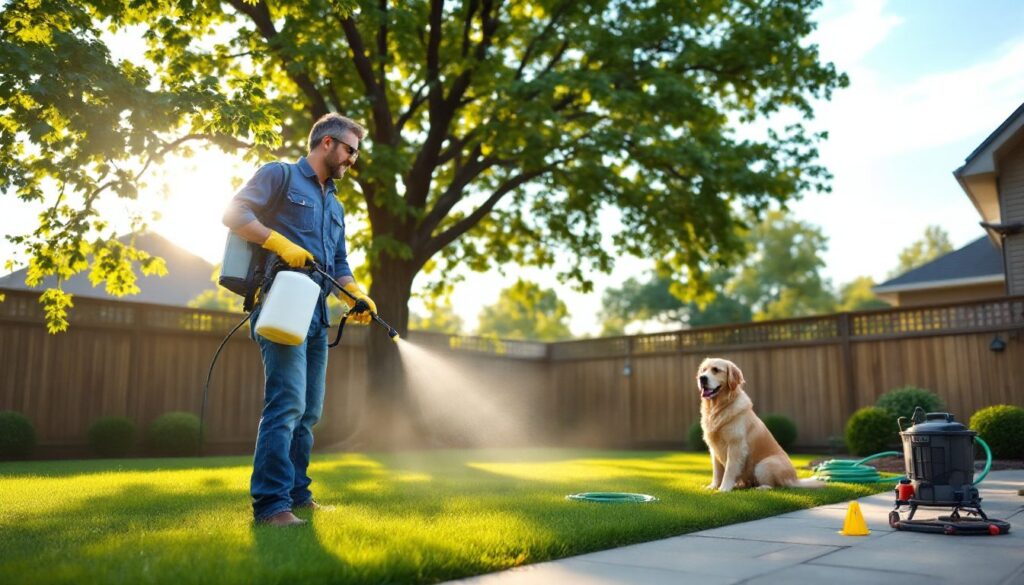
4. Apply treatment
Spray applications:
- Start at the farthest point from your exit and work backward
- Hold the spray wand 12 to 18 inches from the surface
- Apply until vegetation and soil are wet but not running off
- Overlap spray paths by 20% to avoid gaps
- Treat vertical surfaces (tree trunks, deck posts, foundation walls up to 2 feet high) where fleas may pupate
Granular applications:
- Apply evenly across treatment zones
- Water in immediately with ¼ to ½ inch of irrigation (about 15 to 20 minutes with a sprinkler)
Aim for early morning or late evening when wind is calm and temperatures are below 85°F. High heat can cause rapid evaporation and reduce effectiveness.
5. Observe re-entry interval
Keep pets, kids, and yourself off treated areas until dry. For most products, this is 2 to 4 hours. Post a sign or flag treatment zones if needed. When looking for home improvement guidance on outdoor projects, safety protocols are non-negotiable.
6. Retreat as needed
Most flea treatments for the yard require follow-up applications 21 to 28 days later to catch newly emerged adults. Continue treatments through flea season (spring through first hard freeze in most regions). In southern climates with mild winters, year-round treatment may be necessary.
7. Monitor results
Walk your yard wearing white socks pulled over pant cuffs 3 to 5 days post-treatment. Fleas will jump onto the socks and be visible against the white fabric. If you see more than one or two fleas, recheck your coverage and consider a second application or switching products.
Preventing Future Flea Infestations
Treatment alone won’t keep your yard flea-free long-term. Habitat modification and maintenance are equally important.
Manage vegetation and moisture:
- Trim shrubs and tree branches to increase sunlight penetration and airflow
- Keep grass mowed to 3 inches or less
- Remove leaf litter, grass clippings, and brush piles promptly
- Fix drainage issues, leaky hoses, and downspout runoff that create damp zones
- Consider replacing dense groundcovers like ivy in pet areas with mulch or gravel, which fleas find inhospitable
Control wildlife access:
Wild animals are flea taxis. Discourage them by:
- Securing trash cans with locking lids
- Removing fallen fruit from trees
- Fencing gardens and compost bins
- Sealing crawlspace and deck access points with ¼-inch hardware cloth
- Relocating bird feeders away from the house (birdseed attracts rodents, which carry fleas)
If you’re tackling outdoor improvement projects, integrating pest barriers into landscaping plans saves trouble later.
Treat pets year-round:
Even the best yard flea treatment won’t help if pets bring fleas in from walks, dog parks, or vet visits. Use veterinarian-recommended flea preventatives (topical, oral, or collar) consistently. Combining a flea and tick yard treatment safe for dogs with on-animal protection creates a multi-barrier defense.
Create flea-free zones:
Install a 3- to 5-foot barrier of cedar mulch, pea gravel, or river rock between wooded areas and your lawn. Fleas and ticks rarely cross dry, open barriers. This also helps with tick control.
Seasonal deep cleans:
In spring and fall, do a thorough yard cleanup:
- Power wash decks, patios, and concrete where flea eggs may accumulate
- Launder or replace outdoor pet bedding
- Inspect and treat sheds, garages, and outbuildings if pets have access
Re-treat proactively:
Don’t wait for fleas to reappear. If you live in a high-risk area (humid climate, wooded lot, multiple pets), maintain a monthly or bi-monthly treatment schedule during warm months. The best flea and tick yard treatment is the one applied before you see pests.
Conclusion
A well-executed yard flea treatment strategy combines the right product for your situation, thorough application, and ongoing habitat management. Whether you choose chemical knockdown, natural solutions, or professional service, consistency matters more than any single treatment. Start with the step-by-step process above, adjust based on your results, and keep up with preventative maintenance. Your yard, and your pets, will thank you.