Table of Contents
ToggleIf you’ve spent any time in a lumber yard or scrolled through woodworking forums, you know DeWalt’s distinctive yellow-and-black tools are everywhere. Their miter saws have earned a reputation for delivering clean cuts without draining your wallet or requiring constant recalibration. Whether you’re installing crown molding, building deck railings, or framing out a shed, the right miter saw turns frustrating angle work into repeatable precision. This guide walks through DeWalt’s current lineup, breaks down which features actually matter for home projects, and helps you choose a model that’ll still be running five years from now.
Key Takeaways
- DeWalt miter saws use brushless motors and cam-lock systems that hold angles without creep, making them reliable for precision angle work in residential and professional projects.
- A 12-inch DeWalt miter saw handles 2×12 lumber vertically and 2×16 material at 45° bevel, providing sufficient capacity for framing, deck builds, and trim work without sliding features.
- Sliding compound saws increase crosscut capacity but add 60+ pounds and maintenance complexity, while compound-only models remain lighter and simpler for trim-focused DIYers.
- Corded DeWalt models deliver consistent 15-amp power at $100–$200 less than cordless equivalents, while cordless options on the 20V or 60V FlexVolt platform eliminate extension cords for job-site mobility.
- Calibrate angles before every project using a machinist square, swap the stock blade for a 60–80 tooth carbide version for hardwoods, and always support long workpieces and wear N95 dust masks when cutting treated lumber.
Why DeWalt Miter Saws Dominate the DIY and Professional Market
DeWalt built its reputation on job sites, where tools either survive or get replaced. Their miter saws use brushless motors in most mid-to-high-end models, extending runtime and cutting down on maintenance compared to brushed alternatives. The cam-lock miter system on their newer saws holds angles without creep, critical when you’re cutting 12 pieces of baseboard at 45° and can’t afford cumulative error.
Blade capacity matters more than marketing suggests. DeWalt’s 12-inch models handle 2×12 dimensional lumber in a single vertical cut and crosscut 2×16 material when the blade’s beveled at 45°. That’s enough capacity for most residential framing, deck builds, and trim work without needing a sliding feature. Actual lumber dimensions matter here: a nominal 2×12 measures 1.5″ × 11.25″, and cheaper saws often can’t clear the full width.
Warranty coverage separates weekend tools from workhorses. DeWalt offers a 3-year limited warranty, 1-year free service contract, and 90-day money-back guarantee on most saws. That service contract covers worn brushes, carbon buildup, and calibration drift, common issues when cutting treated lumber or engineered materials like MDF that generate abrasive dust.
Types of DeWalt Miter Saws: Which One Fits Your Project Needs?
Compound vs. Sliding Compound Miter Saws
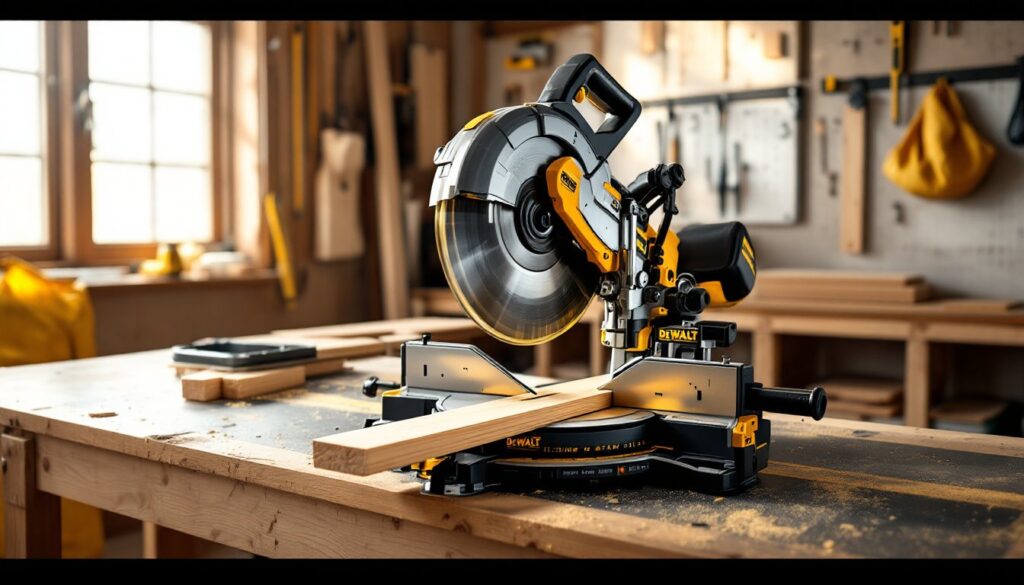
A compound miter saw tilts the blade left or right (bevel) and rotates the table (miter), but the blade drops straight down. This works for crown molding laid flat, picture frames, and most trim under 6 inches wide. DeWalt’s DWS715 is a solid 12-inch compound model: simple, durable, and under 45 pounds, so you can haul it upstairs without herniated discs.
Sliding compound saws add horizontal rails, letting the blade travel forward and back. That increases crosscut capacity, a 10-inch sliding saw cuts wider boards than a 12-inch non-slider. The trade-off is weight (often 60+ pounds), more parts to maintain, and fence alignment issues if the rails rack over time. For finish carpenters installing wide casing or building furniture, the sliding feature is non-negotiable. For trim-focused DIYers, it’s often overkill.
Double-bevel models tilt both directions without flipping your workpiece. If you’re cutting crown molding in place (nested against the fence), a double-bevel saw like the DWS780 eliminates repositioning. Single-bevel models cost less but require flipping boards for opposing angles, manageable but slower on big jobs.
Corded vs. Cordless DeWalt Models
Corded saws deliver consistent power and zero runtime anxiety. DeWalt’s corded 12-inch models pull 15 amps and spin blades at 3,800 RPM, enough torque to rip through 4×4 pressure-treated posts without bogging. If your workspace has reliable outlets, corded makes sense. Most corded DeWalt saws also cost $100–$200 less than equivalent cordless models.
Cordless saws run on DeWalt’s 20V MAX or FlexVolt battery platform. FlexVolt batteries (60V) deliver comparable power to corded models and work across DeWalt’s tool ecosystem. The DCS361B (20V cordless sliding saw) handles repetitive trim cuts but struggles with dense hardwoods or wet lumber. For job-site mobility, deck builds, fence installs, or remote remodels, cordless saws eliminate extension cords and generator hassles. Just budget for at least two 5.0Ah batteries and a dual charger: runtime on a single battery averages 150–200 cuts in softwood framing lumber.
Experienced framers often rely on proven techniques to extend battery life, like letting the motor spin down fully between cuts and keeping blades sharp to reduce drag.
Top DeWalt Miter Saw Models to Consider for Home Projects
The DeWalt DWS779 is a 12-inch sliding compound saw that balances capacity and cost. It handles 2×14 dimensional lumber at 90° and features a tall sliding fence that supports crown molding up to 6-5/8 inches nested. The cam-lock system holds miter settings without drift, and the stainless steel miter detent plate has 10 positive stops. Street price hovers around $400–$450, making it a value pick for serious DIYers tackling baseboard, chair rail, or fence pickets.
For cordless flexibility, the DeWalt DCS361M1 (20V MAX) offers portability without sacrificing too much cutting capacity. This 7-1/4-inch sliding saw crosscuts 2×8 lumber at 90° and bevels 0–48° left and right. It’s lighter (around 30 pounds with battery) and ideal for punch-list work, installing window trim, or assembling prefab shed components. Runtime isn’t infinite, expect about 120 cuts per 4.0Ah battery in pine, but it beats dragging 100 feet of extension cord through a job site.
The DeWalt DWS780 represents the top of their corded lineup: a 12-inch double-bevel sliding saw with an integrated XPS LED work light that casts a shadow of the blade onto your workpiece, showing exactly where the kerf will land without lasers that drift out of alignment. The bevel system locks at common angles (0°, 22.5°, 33.9°, 45°) and adjusts via a large paddle for quick changes. This saw costs $550–$650 but earns its keep if you’re installing built-ins, cutting complex trim, or working with expensive hardwoods where a botched cut means wasted money. Many professionals appreciate how precision cutting tools streamline challenging joinery work.
Budget-conscious DIYers should look at the DeWalt DWS715, a 12-inch single-bevel compound saw (no sliding) priced around $300. It handles standard baseboard, door casing, and deck rail cuts without fuss. The 24-tooth carbide blade it ships with is adequate for framing lumber but swap it for a 60-tooth blade if you’re cutting hardwood trim or plywood, more teeth mean cleaner edges and less tear-out.
Essential Features to Look for When Buying a DeWalt Miter Saw
Blade size determines cutting capacity. A 10-inch blade maxes out around 2×6 dimensional lumber vertically at 90°: a 12-inch blade handles 2×12. If you’re building furniture or cutting smaller trim, 10-inch blades cost less and generate less sawdust. For framing, fencing, or structural work, go 12-inch.
Bevel range matters when cutting compound angles for crown molding or roof trim. Most DeWalt saws bevel 0–45° in at least one direction. Double-bevel models tilt both ways, saving time on symmetrical cuts. If you’re only installing baseboards and door casing (both cut at 0° bevel), single-bevel is fine.
Dust collection on miter saws is notoriously weak, but DeWalt’s newer models include a dust bag and rear exhaust port sized for 1-1/4-inch shop-vac hoses. Even with a vac attached, expect 60–70% capture at best. The rest settles on your workbench. Always wear a dust mask rated N95 or higher when cutting treated lumber, MDF, or composite decking, those materials produce fine particulates that standard cloth masks don’t filter.
Fence adjustability impacts versatility. DeWalt’s sliding fences retract to accommodate bevel cuts without the blade hitting the fence face. Tall fences (5+ inches) support crown molding laid flat, which many trim carpenters prefer over nested cuts. Check that fence clamps are tool-free: you’ll adjust them often.
Positive miter stops are detents that click into common angles: 0°, 15°, 22.5°, 31.6° (for crown), 45°. These speed up repetitive cuts and improve consistency. DeWalt’s cam-lock system adds friction to hold custom angles between detents without slipping mid-cut.
Motor power in corded saws is straightforward: 15-amp models deliver around 1,800–2,000 watts and handle anything a DIYer will throw at them. Cordless saws depend on battery voltage, 20V models work for trim, but FlexVolt (60V) tools approach corded performance. If you already own DeWalt 20V batteries, a cordless miter saw is convenient. If you’re starting fresh, corded delivers better value.
How to Get the Most Out of Your DeWalt Miter Saw: Tips and Best Practices
Calibrate angles before every project. Even factory-fresh saws drift slightly during shipping. Use a machinist square to verify the blade sits perfectly perpendicular to the table at 0° miter and 0° bevel. Most DeWalt saws have adjustment bolts under the table to tweak alignment. A 0.5° error compounds across multiple cuts, leaving gaps in your miters.
Use the right blade for the material. The stock blade is a compromise. Swap to a 60–80 tooth carbide blade for hardwoods, plywood, or melamine to minimize tear-out. For pressure-treated lumber or composite decking, a 40-tooth ATB (Alternate Top Bevel) blade lasts longer without gumming up. Clean blades monthly with oven cleaner or pitch remover, resin buildup creates friction, overheats the motor, and burns cut edges.
Support long workpieces. An unsupported 8-foot board will sag mid-cut, ruining your angle. Use roller stands or build simple T-shaped supports from 2×4s. Home maintenance resources often cover how to set up stable work zones. Position supports level with the saw table and lock them in place before cutting.
Clamp small pieces. Don’t hold trim scraps by hand near the blade. Use a toggle clamp or DeWalt’s included hold-down clamp to secure workpieces under 12 inches. Kickback from a 3,800-RPM blade can drive small pieces, or your fingers, into the fence at high speed.
Wear PPE. Safety glasses are non-negotiable: miter saws fling chips at eye level. Use hearing protection, sustained exposure above 85 dB causes permanent damage, and most miter saws hit 95–100 dB under load. A dust mask (N95 minimum) protects lungs from fine particulates, especially when cutting treated lumber that contains copper compounds.
Never remove the blade guard or bypass the trigger lock. DeWalt’s spring-loaded guards retract automatically and cover the blade immediately after each cut. If the guard sticks, clean sawdust from the pivot points, don’t disable it.
Store saws indoors. Moisture corrodes the miter detent plate, rusts adjustment bolts, and warps aluminum tables. If you work in an unheated garage, wipe down the saw after each use and apply a light coat of paste wax to the table surface, it prevents rust and helps boards slide smoothly. Check the manual for lubrication points: most DeWalt sliding saws need dry PTFE spray on the rail system every 50 hours of use.