Table of Contents
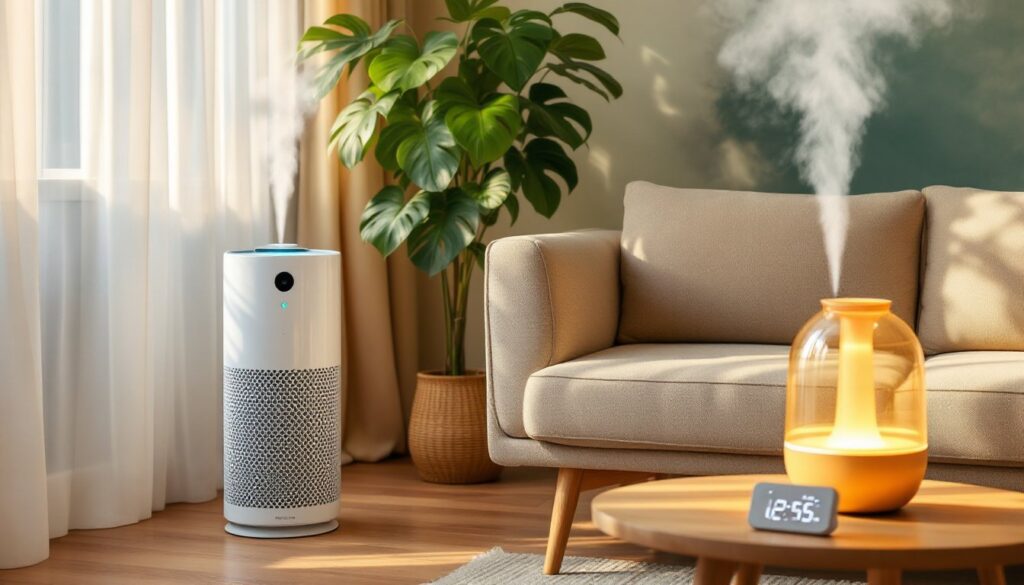
ToggleWalk into any big-box home improvement store and you’ll find entire aisles dedicated to air quality devices. Air purifiers, humidifiers, dehumidifiers, all promising to transform your indoor environment. But if you’re standing there trying to decide between an air purifier and a humidifier, you’re not alone. These two devices get confused constantly, yet they serve completely different purposes. One cleans the air you breathe. The other adjusts the moisture content of that air. Understanding the difference between an air purifier and humidifier, and knowing which one your home actually needs, can save you from dropping cash on the wrong equipment. Let’s break down what each device does, when you’d use one over the other, and whether running both at once makes sense for your space.
Key Takeaways
- An air purifier removes airborne contaminants like dust, pollen, and allergens using HEPA filters, while a humidifier simply adds moisture to the air—they serve completely different purposes and are not interchangeable.
- Choose an air purifier if you have allergies, asthma, pets, or exposure to smoke and pollutants; choose a humidifier if you’re experiencing dry skin, static electricity, or sinus congestion from low indoor humidity.
- Running both an air purifier and humidifier together is effective when properly spaced and maintained, but keep humidity levels between 30–50% RH to avoid encouraging mold and dust mites while your purifier works.
- Size your air purifier based on room square footage and CADR rating, and maintain your humidifier by cleaning the tank weekly and using distilled water to prevent mineral dust and bacterial growth.
- If budget limits you to one device, identify whether your main issue is air quality (air purifier) or humidity levels (humidifier), then add the other device later as needed.
What Is an Air Purifier and How Does It Work?
An air purifier is a mechanical device designed to remove contaminants from the air inside your home. Think of it as a filter system that pulls in dirty air, traps particles, and pushes out cleaner air.
Most residential air purifiers use one or more of these filtration methods:
- HEPA filters (High-Efficiency Particulate Air): Capture 99.97% of particles as small as 0.3 microns, dust, pollen, pet dander, and mold spores.
- Activated carbon filters: Absorb odors, volatile organic compounds (VOCs), and gases like smoke or cooking smells.
- UV-C light: Kills bacteria, viruses, and mold by exposing them to ultraviolet radiation.
- Ionizers: Release charged ions that attach to airborne particles, causing them to clump together and settle out of the air (though some generate trace ozone as a byproduct).
The unit draws air through an intake, passes it through the filter media, and exhausts it back into the room. You’ll typically see a CADR rating (Clean Air Delivery Rate) on the box, measured in cubic feet per minute. Match this to your room size, most manufacturers list recommended square footage on the spec sheet.
Air purifiers don’t add or remove moisture. They strictly deal with particulates, allergens, and pollutants. If you’ve got a dusty workshop, pets that shed, or seasonal allergies, air purifiers can significantly reduce airborne irritants.
What Is a Humidifier and How Does It Work?
A humidifier adds moisture to the air. That’s it. It doesn’t filter, purify, or remove anything, it simply increases relative humidity (RH) levels in your home.
There are several types of humidifiers you’ll encounter:
- Evaporative (cool mist): A fan blows air through a wet wick or filter, naturally evaporating water into the room. Self-regulating, as humidity rises, evaporation slows.
- Ultrasonic: High-frequency vibrations turn water into a fine mist. Quiet and energy-efficient, but can leave white mineral dust if you’re using tap water.
- Steam vaporizers (warm mist): Boil water and release steam. Good for cold-weather comfort, but they run hotter and use more electricity.
- Impeller humidifiers: A rotating disk flings water at a diffuser, creating a cool mist.
Most units have a reservoir tank (typically 1 to 6 gallons) and adjustable output settings. Some include built-in hygrometers to monitor RH and shut off when the target level is reached.
Ideal indoor humidity sits between 30% and 50% RH, per most HVAC guidelines. Too low, and you’ll deal with dry skin, static electricity, cracked woodwork, and respiratory irritation. Too high, and you risk mold growth, dust mites, and condensation on windows.
Humidifiers are common in winter when forced-air heating dries out indoor air, or in arid climates where outdoor humidity is consistently low. They do nothing to improve air cleanliness.
Key Differences Between Air Purifiers and Humidifiers
Here’s the short answer to “what’s the difference between an air purifier and a humidifier?”: one cleans the air, the other moisturizes it. They’re not interchangeable, and a humidifier is definitely not the same as an air purifier.
Let’s break it down:
| Feature | Air Purifier | Humidifier |
|---|---|---|
| Primary function | Removes particles, allergens, odors | Adds moisture to air |
| What it affects | Air quality (cleanliness) | Humidity level (moisture content) |
| Common filters/tech | HEPA, carbon, UV-C, ionizers | Evaporative wicks, ultrasonic misters, steam |
| Helps with | Allergies, asthma, smoke, pet dander, dust | Dry skin, static, sinus congestion, wood cracking |
| What it doesn’t do | Doesn’t change humidity | Doesn’t filter or clean air |
| Maintenance | Replace filters every 6-12 months | Clean tank weekly: replace wicks as needed |
| Energy use | Low to moderate (fans, UV bulbs) | Low to moderate (fans, heating elements) |
Another distinction: air purifiers often run 24/7 during allergy season or year-round if you’ve got pets. Humidifiers, on the other hand, are seasonal or situational, used primarily when RH drops below comfortable levels.
Some newer combo units attempt to do both, but in practice, they’re often just a purifier with a small humidifier tray bolted on. If you need serious filtration and serious moisture, you’re better off with dedicated devices.
Understanding the difference between air purifier and humidifier functionality helps you avoid buying the wrong tool for your problem.
When You Should Choose an Air Purifier for Your Home
If your issue is air quality, not air moisture, an air purifier is the answer. Here’s when it makes sense:
- You or your family have allergies or asthma. HEPA filters capture pollen, dust mites, mold spores, and pet dander, common triggers.
- You have pets. Cats and dogs shed dander constantly. A purifier with a true HEPA filter can reduce airborne pet allergens significantly.
- You live near a busy road, construction site, or industrial area. Outdoor pollutants like diesel exhaust, dust, and particulates infiltrate homes through windows, doors, and HVAC systems.
- You’re sensitive to odors or VOCs. Cooking smells, paint fumes, new furniture, or household cleaners release volatile organic compounds. Activated carbon filters absorb these.
- Someone in the household smokes, or you’re dealing with wildfire smoke. Smoke particles are small enough to penetrate deep into lungs. A quality purifier (CADR rated for smoke) makes a measurable difference.
- Your home has mold or mildew issues. While a purifier won’t fix the root cause (which is usually excess moisture or a leak you need to address), it can trap airborne spores and reduce spread.
Size the unit correctly. A purifier rated for 200 square feet won’t do much in a 400-square-foot family room. Check the ACH (air changes per hour) rating, 4 to 5 ACH is ideal for allergy sufferers.
Don’t expect miracles if you skip other basics: vacuum regularly with a HEPA-bag vacuum, wash bedding in hot water, and seal air leaks around windows and doors. An air purifier is one part of the system, not a magic fix.
When You Should Choose a Humidifier for Your Home
If your home’s air is too dry, a humidifier is what you need. Here’s when it’s the right call:
- Winter months with forced-air heating. Furnaces and heat pumps dry out indoor air fast. If you’re waking up with a scratchy throat or bloody nose, low humidity is likely the culprit.
- You live in an arid or high-altitude climate. Places like Denver, Phoenix, or Albuquerque have naturally low outdoor humidity, which carries indoors.
- You notice static electricity constantly. Shocks when you touch doorknobs, clothes clinging out of the dryer, hair standing on end, all signs RH is below 30%.
- Hardwood floors, furniture, or musical instruments are cracking. Wood expands and contracts with humidity changes. Keeping RH stable (40–50%) protects wood investments.
- You’re dealing with sinus congestion or dry skin. Dry air irritates mucous membranes and skin. A humidifier won’t cure a cold, but it can ease symptoms.
- Your energy bills are high and you want to feel warmer without cranking the thermostat. Humid air feels warmer than dry air at the same temperature. Adding moisture can let you dial back the heat a degree or two.
Pick the right type for your setup. Evaporative models self-regulate and work well in larger spaces. Ultrasonic units are quieter and great for bedrooms, but use distilled water to avoid white dust. Whole-home humidifiers integrate with your HVAC system and are worth considering if you’re upgrading your furnace or dealing with a multi-story house.
Maintenance is non-negotiable. Stagnant water breeds bacteria and mold. Clean the tank and base weekly with vinegar or a mild bleach solution. Replace wicks or filters per the manufacturer’s schedule.
Can You Use Both an Air Purifier and Humidifier Together?
Yes, and in many cases, it’s actually a smart move. These devices tackle separate issues, so running them side-by-side won’t cause interference.
Here’s how to do it effectively:
- Place them a few feet apart. Don’t stack one on top of the other or put them right next to each other. The mist from a humidifier can clog an air purifier’s filter prematurely if they’re too close.
- Monitor humidity levels. Use a basic hygrometer (available for under $15 at any hardware store). Keep RH between 30% and 50%. If you push humidity too high, you’ll encourage dust mites and mold, exactly what the air purifier is trying to remove.
- Run the purifier continuously: use the humidifier as needed. Air purifiers benefit from constant operation. Humidifiers should cycle based on actual RH readings, not gut feel.
- Clean both units regularly. A dirty humidifier can release bacteria and mineral dust into the air, which then gets pulled into the purifier. You’re just moving the problem around.
- Consider your HVAC system. If you have central air with a whole-home humidifier and good filtration (MERV 13+ filters), you might not need standalone units at all. Assess what you’ve already got before buying duplicates.
Some manufacturers sell combo units that claim to purify and humidify. They work, but the humidifier component is often undersized for anything larger than a bedroom. For whole-home coverage, dedicated devices are the better investment.
If you’re choosing between the two and can only afford one right now, consider which problem affects you most: poor air quality or low humidity. Buy that device first, then add the other later if needed.
Conclusion
Air purifiers and humidifiers solve different problems. One cleans particulates and allergens from the air: the other adjusts moisture levels. If you’re dealing with allergies, pet dander, or smoke, grab an air purifier with a true HEPA filter. If dry air is causing static, cracked wood, or respiratory discomfort, a humidifier is the fix. And if your home needs both? Run them together, just keep them spaced out and maintain both units properly. Match the tool to the problem, size it correctly for your space, and skip the combo gimmicks unless you’ve got a small room and modest expectations.