Table of Contents
ToggleLoading a dishwasher seems straightforward, just toss the dirty dishes in and hit start, right? Not quite. The way dishes are arranged inside affects water circulation, detergent distribution, and eventually whether they come out clean or still sporting last night’s marinara sauce. A properly loaded dishwasher can handle heavy-duty pots, delicate glassware, and everything in between without breaking a sweat. This guide walks through the right way to load a dishwasher, from the bottom rack strategy to the great silverware debate, so every cycle delivers spotless results.
Key Takeaways
- Proper dishwasher loading maximizes water circulation and detergent distribution, preventing food residue from remaining on dishes and ensuring spotless results.
- The bottom rack should hold plates, pots, and pans angled downward with adequate spacing between items, while the top rack is reserved for smaller, lighter, and more delicate glassware and plastic items.
- Scrape off excess food before loading rather than pre-rinsing, as modern detergents contain enzymes that require food particles to work effectively.
- Silverware handles should go down for forks and spoons to expose eating surfaces to water spray, but knives must point up for safety when unloading.
- Avoid common mistakes like blocking the detergent dispenser, overloading the machine, placing non-dishwasher-safe items inside, and ignoring the manufacturer’s loading diagram for your specific model.
- Regular filter maintenance and checking spray arms for clogs ensures your dishwasher continues to operate efficiently and deliver clean dishes cycle after cycle.
Why Proper Dishwasher Loading Actually Matters
Dishwashers aren’t magic boxes, they’re precision appliances that rely on water jets, spray arms, and detergent reaching every surface. When dishes block the spray arms or water can’t reach certain angles, food residue stays put.
Water flow is the key factor. Most dishwashers have a spray arm at the bottom and often one at the top or middle. These arms rotate and shoot water upward and outward. If a large plate blocks the lower arm’s rotation, half the load won’t get cleaned. Similarly, nesting bowls or stacking cups traps water and prevents proper rinsing.
Detergent distribution also depends on smart loading. The detergent dispenser typically sits on the inside of the door. When the cycle starts, detergent drops down and mixes with water from the spray arms. Overloading the bottom rack directly below the dispenser can block detergent from circulating effectively.
Energy and water efficiency improve when the dishwasher is loaded correctly. Running half-empty loads wastes resources, but cramming too many items in forces re-washing, which doubles water and electricity use. A well-organized dishwasher loading guide balances capacity with cleaning performance, ensuring every cycle is both economical and effective.
Pre-Rinse or Not? Preparing Your Dishes for the Dishwasher
The pre-rinse debate divides kitchens. Some people run every dish under the faucet first: others scrape and load. Modern dishwashers are designed to handle food particles, so a full rinse usually isn’t necessary, and can actually reduce cleaning performance.
Most detergents contain enzymes that need something to cling to. If dishes are completely clean, the enzymes attack the dishware itself or leave a residue. Scraping off large food chunks is essential, though. Bones, fruit pits, large pasta pieces, and sticky sauces can clog the filter or spray arms.
Use a spatula or scraper to remove excess food, then load the dish. If something’s dried on, like oatmeal or cheese, a quick soak in the sink helps, but don’t waste water rinsing every plate. For burnt-on residue, place the item in the bottom rack facing the strongest spray jets.
Check the filter regularly. Most dishwashers have a removable filter at the bottom that catches food debris. If it’s clogged, water can’t circulate properly, and dishes come out grimy no matter how well they’re loaded. Rinse the filter under hot water weekly or after heavy loads to maintain peak performance.
How to Load the Bottom Rack for Maximum Cleaning Power
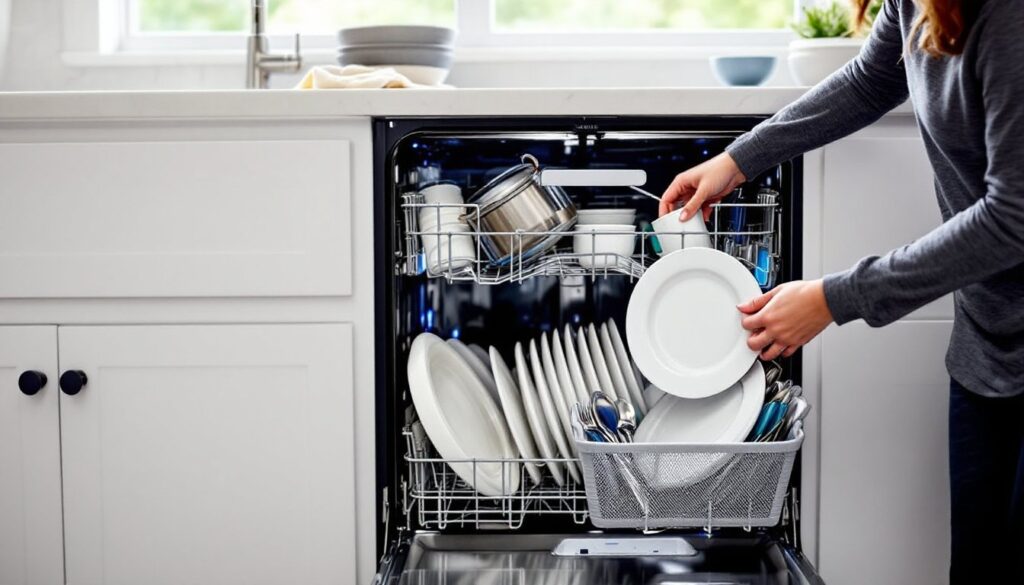
The bottom rack is the workhorse. It handles plates, pots, pans, and any heavily soiled items. This rack sits closest to the heating element and main spray arm, so it gets the most aggressive wash action.
Plates and large dishes should face the center of the machine, angled slightly downward. This positioning allows water to hit the face of each plate and drain properly. Don’t lay plates flat, they’ll trap water and food. Instead, slot them between the tines, leaving space between each one so water can reach all surfaces.
Pots, pans, and baking sheets go along the sides or back, angled downward. Place them so they don’t block the spray arm’s rotation. If a pan is too tall and prevents the arm from spinning, hand-wash it instead. Large serving bowls should also go on the bottom rack, positioned at an angle to avoid nesting.
Avoid overloading. It’s tempting to squeeze in one more plate, but overcrowding blocks water flow. If dishes touch or overlap significantly, they won’t come out clean. When you properly load a dishwasher, you’ll notice improved results without needing a second cycle.
Most home organization experts recommend leaving a small gap between items. The best way to load a dishwasher’s bottom rack is to think of it like parking cars in a lot, each item needs its own space to get fully cleaned.
Mastering the Top Rack: Cups, Glasses, and Delicate Items
The top rack is for smaller, lighter, and more delicate items. Water pressure is gentler here, which protects glassware and plastics from heat damage.
Cups and glasses should be placed upside down at an angle. This prevents water from pooling inside and ensures proper drainage. Position them between the tines, not over them, so they’re secure and won’t move during the cycle. Avoid placing large mugs or tall glasses where they might block the spray arm below.
Bowls and small containers go on the top rack, also angled downward. Plastic items must stay on the top rack only, the heating element on the bottom can warp or melt lightweight plastics. Check that plastic containers are dishwasher-safe before loading: not all are rated for high heat.
Stemware and wine glasses need extra care. Many top racks have fold-down tines or stemware holders that cradle delicate glasses securely. If your model doesn’t have these features, place stemware in the corners where movement is minimal. Serious wine enthusiasts often hand-wash stemware to avoid etching, but everyday glasses handle the top rack just fine.
Don’t nest items on the top rack, either. Stacking bowls or overlapping plates blocks water spray and leaves food residue. The proper dishwasher loading techniques emphasize spacing items apart for optimal water circulation.
The Silverware Basket Strategy: Up or Down?
The silverware basket sparks more kitchen arguments than any other dishwasher feature. Should handles go up or down? The answer depends on safety and cleaning priorities.
Forks and spoons should go handles down for better cleaning. This exposes the eating surfaces to water spray. But, knives should always go handles up to prevent accidental cuts when unloading. Sharp blades pointing down create a safety hazard.
Mix up the silverware in the basket, don’t group all the spoons together. When utensils nest, water can’t reach every surface. Alternate handles up and down (except for knives) and spread different types throughout the compartments.
Serving utensils and large spatulas that don’t fit in the basket can lay flat on the top rack, as long as they don’t block the spray arm or fall through the gaps. Some dishwasher models have a third rack specifically for flatware and utensils, which solves the up-or-down debate entirely and improves cleaning.
Wooden utensils, cast iron, and good knives don’t belong in the dishwasher at all. The high heat and harsh detergent damage wood, strip cast iron seasoning, and dull knife edges. Hand-wash these items to extend their lifespan.
Common Dishwasher Loading Mistakes to Avoid
Even experienced home cooks make dishwasher loading errors that sabotage cleaning performance. Here are the most common mistakes and how to avoid them.
Blocking the detergent dispenser. Tall items on the bottom rack can prevent the dispenser door from opening fully, which means detergent doesn’t release properly. Always check that the dispenser area is clear before starting a cycle.
Putting non-dishwasher-safe items inside. Aluminum, copper, certain non-stick pans, fine china with metallic trim, and anything labeled hand-wash only should stay out. These materials can discolor, warp, or lose their finish in the dishwasher.
Loading dishes dirty-side in. This sounds obvious, but it happens. The dirtiest surfaces should face the center and downward to meet the water spray head-on. Dishes facing the wrong direction come out still dirty.
Overloading or underloading. A packed dishwasher blocks water flow, while a nearly empty one wastes water and energy. Aim for a full load without items touching. If there aren’t enough dishes for a full cycle, use a rinse cycle to prevent food from hardening, then wait for more dishes to accumulate.
Ignoring the manual. Dishwasher models vary. Some have adjustable racks, fold-down tines, or specific loading zones. The manufacturer’s diagram how to load a dishwasher can optimize results for that particular model. Many manuals include a dishwasher loading diagram that shows exactly where each item type should go.
Regular appliance maintenance advice includes checking spray arms for clogs and running a cleaning cycle monthly with a dishwasher cleaner to remove mineral buildup and grease.
Conclusion
Learning how to load the dishwasher properly isn’t complicated, but the payoff is huge, cleaner dishes, fewer re-washes, and a machine that runs more efficiently. Focus on water circulation, angle items correctly, and avoid blocking spray arms or detergent dispensers. With these strategies, a loaded dishwasher delivers spotless results every time, turning a daily chore into a simple, reliable routine.