Table of Contents
ToggleNewport News sits at the convergence of water, historic neighborhoods, and humid Virginia summers, a recipe that attracts far more than tourists. Termites, mosquitoes, rodents, and roaches thrive here, and they don’t wait for an invitation. Whether you’re protecting a century-old craftsman or a new-build in Hidenwood, pest control isn’t just about spraying the baseboards twice a year. It’s about understanding what you’re up against, knowing when you can handle it yourself, and recognizing when it’s time to bring in a pro with a license and a truck full of the right tools.
Key Takeaways
- Newport News pest control requires year-round attention due to the region’s humid climate, water proximity, and older housing stock that creates ideal breeding grounds for termites, rodents, and cockroaches.
- Homeowners can prevent most infestations by sealing gaps, eliminating moisture, removing food sources, and maintaining yards—but professional pest control is essential for structural pests like termites, bed bugs, and recurring problems.
- Licensed pest control companies in Virginia must be certified by VDACS and should offer inspections, detailed treatment plans, and integrated pest management (IPM) to avoid re-infestations and minimize chemical exposure.
- Costs for Newport News pest control range from $100–$150 quarterly for general service to $1,200–$3,500 for termite treatments, with additional charges for rodent exclusion and bed bug fumigation depending on severity.
- A reputable Newport News pest control service provides warranties, follows up on treatments, and explains the specific products and methods they use before beginning work.
Why Newport News Homeowners Face Unique Pest Challenges
Newport News isn’t your average suburb. The city’s geography, bounded by the James River and Chesapeake Bay, creates a humid, temperate environment that pests love. Year-round moisture means termites never really take a break, and mosquitoes breed in standing water that accumulates after coastal storms.
The housing stock matters, too. Older homes in the North End or Hilton Village often have crawl spaces, pier-and-beam foundations, and wood siding, all entry points or food sources for carpenter ants, subterranean termites, and mice. Newer developments in Kiln Creek or Denbigh aren’t immune either: construction often disturbs existing pest colonies, pushing them into adjacent properties.
Military families rotating through the area may not have deep roots in the neighborhood, which can lead to gaps in preventive maintenance. A vacant rental or a home between tenants becomes a five-star hotel for German cockroaches and Norway rats. The region’s mild winters don’t kill off pest populations the way a hard freeze would up north, so problems compound year over year if left unchecked.
Most Common Household Pests in Newport News
Subterranean Termites: The heavyweight champions of structural damage. They tunnel up through soil and into floor joists, sill plates, and studs. Swarmers appear in spring, but the real damage happens out of sight. Look for mud tubes along foundation walls and hollow-sounding wood.
German Cockroaches: Small, tan, and prolific breeders. They hide in kitchen cabinets, behind appliances, and inside electrical outlets. If you see one in daylight, you’ve got a serious infestation. They’re not just gross, they trigger asthma and spread bacteria.
Mosquitoes: Aedes and Culex species breed in anything that holds water for more than a few days, clogged gutters, bird baths, kiddie pools. Besides the itch, they carry West Nile virus and Eastern equine encephalitis, both present in Virginia.
Norway Rats and House Mice: Rats need a hole the size of a quarter: mice can squeeze through a dime-width gap. They chew through wiring (a fire hazard), contaminate insulation, and leave droppings in pantries. Check your attic in fall, they’re looking for winter shelter.
Carpenter Ants: Often mistaken for termites, but they excavate wood instead of eating it. You’ll find frass (sawdust-like debris) below exit holes. They prefer moist, rotted wood, so fix leaky roofs and plumbing first.
Bed Bugs: Not a sign of poor housekeeping. They hitch rides on luggage, furniture, and clothing. If you wake up with itchy, linear bites and spot tiny rust stains on sheets, inspect mattress seams and bed frames with a flashlight.
DIY Pest Prevention Tips Every Homeowner Should Know
Most pest problems start because something made your home inviting. Tighten up your defenses before you reach for a spray can.
Seal the Envelope:
• Walk your home’s perimeter and caulk gaps around utility penetrations, where pipes, cables, and vents enter the house.
• Install door sweeps on exterior doors. A ¼-inch gap is a superhighway for mice.
• Replace torn window screens. Use 20-mesh or finer to keep out tiny insects.
• Check foundation vents in crawl spaces. They should be screened and unobstructed.
Eliminate Moisture:
• Fix leaky faucets, pipes, and HVAC condensate lines. Pests need water as much as they need food.
• Grade soil away from the foundation (minimum 6-inch drop over 10 feet) to prevent pooling.
• Clean gutters twice a year. Clogged downspouts create standing water and rot fascia boards.
• Use a dehumidifier in basements and crawl spaces to keep relative humidity below 50%.
Remove Food Sources:
• Store pantry goods in airtight containers, not the original cardboard or plastic bags.
• Don’t leave pet food out overnight.
• Take garbage out regularly and use cans with tight-fitting lids.
• Clean up crumbs and spills immediately. Roaches can survive on a thin film of grease.
Yard Maintenance:
• Trim tree branches and shrubs at least 18 inches away from siding and rooflines. They’re bridges for ants, squirrels, and roof rats.
• Stack firewood off the ground and at least 20 feet from the house.
• Dump standing water from planters, tarps, and toys after rain.
DIY Treatment Limitations:
Over-the-counter sprays and baits work for minor problems, a few ants on the counter, an occasional roach. But if you’re seeing pests daily, or if you’re dealing with termites, bed bugs, or a rodent colony, DIY products won’t reach the source. You’ll waste money and let the problem get worse.
When to Call a Professional Pest Control Service
Some situations are beyond the scope of a homeowner with a can of Raid and good intentions.
Structural Pests:
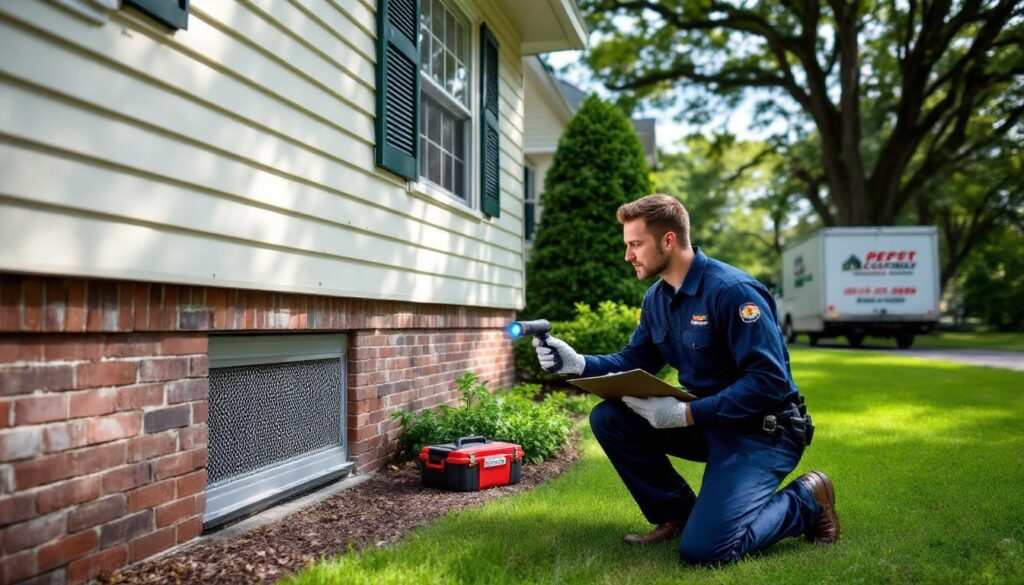
Termites and carpenter ants require licensed applicators with access to professional-grade termiticides and baiting systems. In Virginia, termite treatments often involve trenching around the foundation and drilling through slabs, work that requires specialized equipment and training. If you’re buying or selling a home, most lenders require a Wood Destroying Insect (WDI) inspection before closing.
Health Hazards:
Bed bugs and German cockroaches are notoriously hard to eradicate without fumigation, heat treatment, or insect growth regulators that aren’t available at retail. Pros know where to look, inside outlet covers, under baseboards, behind picture frames, and they have the gear to treat those areas safely.
Recurring Infestations:
If you’ve bombed the kitchen three times and roaches keep coming back, there’s a harborage or entry point you’re missing. Professionals use integrated pest management (IPM): they inspect, identify the species, locate the source, treat it, and set up monitoring to prevent re-entry.
Wildlife:
Squirrels, raccoons, and bats are protected under certain conditions and often require humane trapping and exclusion. In Newport News, you may need a Virginia Department of Wildlife Resources permit for some species. A good pest control company will handle trapping, cleanup (including contaminated insulation), and permanent exclusion.
Safety Concerns:
Large wasp or hornet nests near entryways, venomous spiders in crawl spaces, or rat infestations in attics full of old wiring, these aren’t DIY projects. Professionals have PPE (respirators, protective suits, gloves) and liability insurance.
How to Choose the Right Pest Control Company in Newport News
Not all pest control companies are created equal. Here’s how to separate the pros from the fly-by-night operators.
Licensing and Certification:
In Virginia, pest control technicians must be certified by the Virginia Department of Agriculture and Consumer Services (VDACS). Ask for the company’s license number and verify it online. Technicians should carry identification and be able to explain what products they’re using and why.
Experience with Local Pests:
A company that specializes in termite work may not be your best bet for a bed bug problem. Ask how many jobs they’ve done for your specific pest in the Newport News area. References and online reviews (check multiple sources, Google, top-rated pest control specialists can surface patterns.
Inspection and Treatment Plan:
Legit companies offer a free or low-cost inspection and provide a written estimate that details the pest, treatment method, products used, and a timeline. If someone shows up and immediately starts spraying without asking questions, walk away.
Integrated Pest Management (IPM):
The best companies don’t just spray and leave. They identify conditions that attract pests, recommend structural repairs, and use the least-toxic effective treatment. IPM reduces chemical exposure and keeps problems from recurring.
Guarantees and Follow-Up:
Most reputable companies offer a warranty, 30 to 90 days is common for general pest control: termite warranties can last years. Make sure the contract spells out what’s covered and what triggers a free re-treatment.
Insurance:
Verify that the company carries both general liability and worker’s compensation insurance. If a technician gets hurt on your property or damages your home, you don’t want to be on the hook.
Cost of Pest Control Services in Newport News
Pricing varies widely depending on the pest, the size of your home, and the severity of the infestation. These are ballpark figures for 2026 in the Newport News area: always get multiple quotes.
General Pest Control (quarterly service): $100–$150 per visit for a typical single-family home. Covers ants, spiders, roaches, and other common crawlers. Annual contracts often include a discount and free re-treatments between visits.
Termite Treatment:
• Liquid barrier treatment: $1,200–$2,500 for an average home (1,500–2,000 sq. ft.). Includes trenching and soil treatment around the foundation.
• Baiting systems: $1,500–$3,500 for installation, plus $300–$500 annually for monitoring and bait replenishment. Slower-acting but less invasive.
Rodent Control: $200–$600 for inspection, trapping, and exclusion. If rodents have damaged insulation or wiring, add $500–$2,000 for attic cleanup and repairs.
Bed Bug Treatment: $500–$1,500 for a single-room heat treatment or targeted chemical application. Whole-house fumigation can run $2,000–$4,000.
Mosquito Control: $75–$150 per monthly treatment during warm months (April–October). Includes fogging and larvicide application in standing water.
Factors That Affect Cost:
• Home size and layout: Crawl spaces, multi-level homes, and dense landscaping take longer to treat.
• Infestation severity: A few ants vs. a colony in the walls.
• Treatment method: Heat, fumigation, and baiting systems cost more than sprays.
• Market fluctuations: Labor and chemical costs vary. Supply chain issues and regional demand (hurricane season, for example) can drive prices up.
Homeowners can compare cost estimators and request multiple bids, but don’t choose solely on price. The cheapest bid often means cut corners, diluted chemicals, undertrained techs, or no follow-up.
Conclusion
Pest control in Newport News isn’t a one-and-done project. The climate, the housing stock, and the proximity to water mean you’re always one clogged gutter or unsealed crawl space away from an infestation. Start with solid prevention, seal, dry, clean. Handle minor issues yourself, but know when to call in a licensed pro. A termite swarm or a bed bug infestation isn’t the time to learn on the job. Get multiple quotes, check licenses, and don’t skip the follow-up visits. Your home’s structural integrity and your family’s health are worth the investment.