Table of Contents
ToggleSawdust from cutting trim, drywall dust settled in tight corners, or workshop debris on shelves, sometimes you don’t need the full stick vacuum treatment. The Dyson V7 Trigger handheld vacuum offers cordless convenience for quick cleanups where a full-size unit feels like overkill. Unlike corded shop vacs that require an outlet nearby or bulky upright models that won’t fit into cramped spaces, this handheld brings genuine suction power to the mess itself. Whether you’re midway through a renovation or just maintaining your workspace, understanding what this compact tool delivers, and where it falls short, helps you decide if it’s the right addition to your cleaning arsenal.
Key Takeaways
- The Dyson V7 Trigger handheld vacuum delivers 100 air watts of cordless suction power with a motorized brush bar, making it ideal for quick cleanups in vehicles, tight spaces, and above-floor surfaces without the bulk of full-size units.
- Its compact 3.7-pound design and trigger-style power control excel at spot cleaning upholstery, pet hair, and workshop debris, but the small 0.14-gallon bin requires frequent emptying and limits extended runtime to 6 minutes in MAX mode.
- Battery life varies from 30 minutes in standard mode to just 6 minutes in MAX mode, with a 3.5-hour charging time, so plan accordingly for multi-vehicle detailing or extended projects.
- The Dyson V7 Trigger works best as a supplement to, not a replacement for, your primary vacuum or shop vac, handling stairs, car interiors, and quick spot messes between scheduled deep cleaning sessions.
- Regular maintenance—emptying the bin after use, monthly filter washing, and checking the brush bar for tangles—preserves peak suction performance and extends the vacuum’s lifespan.
What Makes the Dyson V7 Trigger Stand Out?
The Dyson V7 Trigger separates itself from generic handheld vacuums through its cyclonic separation technology and motorized brush bar. Most handheld units rely on suction alone, which works fine for loose debris but struggles with embedded dust or pet hair on upholstery. The V7 Trigger’s motorized combination tool agitates fibers while the motor pulls air through at speeds up to 1,600 revolutions per minute.
This handheld variant is part of the broader Dyson V7 cordless vacuum lineup, which includes the Dyson V7 Animal cordless vacuum and Dyson V7 Absolute cordless vacuum stick models. The Trigger drops the wand and floor head, keeping just the motor body, bin, and a compact tool attachment. That makes it lighter, about 3.7 pounds, and easier to maneuver in vehicle interiors, on stairs, or above your head when cleaning crown molding ledges after installation.
Unlike the Dyson V7 Motorhead cordless vacuum or Dyson V7 stick vacuum, which are designed for whole-room floor cleaning, the Trigger focuses on spot duty. It’s not a replacement for your primary vacuum but a supplement for jobs where dragging out the main unit wastes more time than the cleanup itself. The Dyson V7 hand vacuum design also means no tripping over cords when you’re already navigating ladders, toolboxes, or extension cables in a workspace.
Key Features and Specifications
The Dyson V7 vacuum cleaner motor generates 100 air watts of suction in MAX mode, which puts it on par with many corded handhelds but in a battery-powered package. The two-tier radial cyclone array separates fine dust and larger particles without relying on bags or losing suction as the bin fills.
Core specifications:
- Motor: V7 digital motor, up to 1,600 rpm
- Suction power: 100 AW (MAX mode), 28 AW (standard mode)
- Dustbin capacity: 0.14 gallons (0.54 liters)
- Weight: Approximately 3.7 lbs
- Filtration: Whole-machine HEPA filtration, capturing 99.97% of particles as small as 0.3 microns
- Noise level: Around 85 decibels on MAX mode
- Charging time: 3.5 hours for a full charge
The included combination tool features stiff nylon bristles on one edge and a wide suction slot on the other. Flip it over depending on the surface, bristles for fabric or textured surfaces, slot for hard materials like metal shelving or the dashboard of your truck. Some versions ship with a crevice tool for tight gaps between seat cushions or along window tracks.
The Dyson V7 Motorhead vacuum and Dyson V7 Animal vacuum stick versions share this same motor platform, so replacement parts and accessories are often interchangeable if you already own another V7 model. The trigger-style power control means the motor only runs when you squeeze the handle, which conserves battery but can cause hand fatigue during longer jobs.
Performance: How Well Does It Actually Clean?
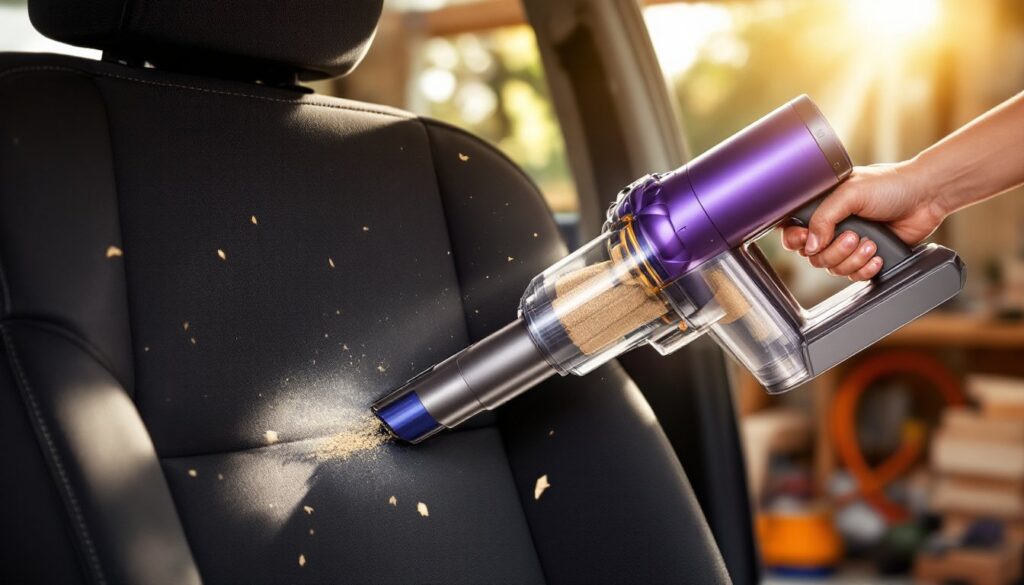
In real-world testing across home and workshop environments, the Dyson V7 Trigger handheld vacuum handles fine particulates like sanding dust, crumbs, and pet hair with minimal passes. On MAX mode, it pulled embedded sawdust from fabric car seats and removed drywall powder from the edges of baseboards where a broom just spreads the mess around.
Where it excels:
- Upholstery and car interiors: The motorized brush bar agitates fabric fibers, dislodging pet hair and ground-in dirt better than suction-only handhelds.
- Above-floor surfaces: Cleaning window sills, air vents, or the top of door frames is easier without wrestling a stick vacuum overhead.
- Workshop cleanup: Grabbing metal shavings, wood chips, and dust from drill presses or miter saw stations without dragging out the shop vac.
Where it struggles:
- Large debris: The small bin and narrow intake mean you’ll empty it frequently when vacuuming a full car interior or cleaning up after cutting a stack of 2x4s.
- Heavy material: It won’t replace a shop vac for wet messes or larger chunks like drywall scraps.
- Continuous runtime: Battery life limits extended jobs, which we’ll cover in the next section.
Compared to corded shop vacuums, the Trigger trades raw capacity and unlimited runtime for mobility and ease of use. Compared to other handhelds in the Dyson cordless vacuum V7 family, it sacrifices floor-cleaning capability for portability. Independent reviews from testing labs confirm strong suction performance on upholstery and hard surfaces, though the small dustbin remains a common trade-off.
Best Uses for Homeowners and DIY Enthusiasts
The Dyson V7 hand vacuum shines in scenarios where convenience beats capacity. Here’s where it earns its keep:
Vehicle detailing: Keep it in the garage to vacuum car seats, floor mats, and trunk areas between trips to the car wash. The cordless design lets you reach all seats without snaking an extension cord to the driveway.
Between project cleanups: After installing trim, cutting drywall, or drilling pilot holes, grab the Trigger to collect dust from windowsills, counters, or the top of your miter saw without powering up the full shop vac.
Stairs and entryways: Quickly hitting stairs after tracking in mud or clearing the entryway mat before guests arrive is faster than hauling the main vacuum upstairs.
Pet hair maintenance: For homes with dogs or cats, the motorized tool pulls hair from couches, pet beds, and fabric cushions. It won’t handle whole-room vacuuming, but it tackles the couch corner where the dog sleeps.
Spot messes in tight spaces: Crumbs behind the toaster, dust in the HVAC return vent, or debris along window tracks, jobs that take 30 seconds with a handheld and five minutes with anything larger.
Not ideal for:
- Full-room floor cleaning: The Dyson V7 Animal cordless vacuum or Dyson V7 Absolute cordless vacuum stick models are better suited for that.
- Heavy construction debris: Use a dedicated shop vac with a larger bin and higher CFM rating.
- Wet messes: This is a dry-only vacuum: spilled paint thinner or wet drywall mud will damage the motor.
If your workflow involves frequent quick cleanups rather than scheduled deep cleaning sessions, the Trigger fits the bill. If you need one vacuum to do everything, a convertible stick model like the Dyson V7 Advanced cordless vacuum cleaner offers more versatility.
Battery Life and Charging Considerations
The Dyson Vacuum V7 platform uses a lithium-ion battery rated for approximately 30 minutes of fade-free suction in standard mode. Switch to MAX mode for tougher jobs, and that drops to about 6 minutes of continuous runtime. The trigger-style power control helps stretch battery life, release the trigger between passes, and the motor stops immediately.
Charging logistics:
- Full charge time: 3.5 hours from empty to full
- Charging method: Plug the included wall-mount charger directly into the vacuum’s charging port or dock the unit on the wall bracket
- Battery indicator: Three LED lights on the back of the motor show charge status: one blinking light means low battery
For most handheld jobs, vacuuming a car interior, cleaning a couch, or hitting a few shelves, six to ten minutes is enough. But if you’re detailing multiple vehicles or cleaning up after a long afternoon of cutting lumber, you’ll need to plan around charge cycles or keep a second battery on hand if Dyson offers that option for your region.
Battery longevity tips:
- Don’t leave the vacuum on the charger indefinitely after it hits 100%: unplug it once charged to preserve battery health.
- Store the unit in a climate-controlled space: extreme cold or heat shortens lithium-ion lifespan.
- If you won’t use it for weeks, charge it to about 50% and disconnect it.
Dyson doesn’t officially list battery replacement costs in all markets, but third-party batteries run $40–$70, and OEM replacements are closer to $80–$100. Factor that into your long-term cost if you plan to keep the vacuum for several years. Reviews from independent testers note that battery performance holds steady for the first 18–24 months, then gradually declines with heavy use.
Maintenance Tips to Maximize Longevity
Regular upkeep keeps the Dyson V7 Trigger running at peak performance and avoids the loss of suction that plagues neglected units.
Empty the bin after every use: The 0.14-gallon capacity fills quickly with sawdust or pet hair. Don’t wait until the MAX line, emptying it sooner prevents clogs and maintains airflow.
Wash the filter monthly: The pre-motor filter is located behind the purple release latch near the bin. Rinse it under cold water (no detergent), squeeze out excess water, and let it air-dry completely, at least 24 hours, before reinstalling. A damp filter will damage the motor.
Check the brush bar for tangles: Hair and string wrap around the motorized tool’s bristles. Use scissors to cut away any buildup: a clogged brush bar reduces agitation and suction.
Inspect the cyclone assembly: Tap out any fine dust stuck inside the clear cyclone cones. If you notice reduced suction even after emptying the bin and cleaning the filter, disassemble the cyclone (per the manual) and rinse it under water. Dry thoroughly before reassembly.
Wipe down the charging contacts: Dust or debris on the metal contacts where the charger connects can prevent proper charging. Use a dry cloth to clean them every few months.
Store it properly: If you mount the wall bracket, make sure it’s anchored into a stud or use appropriate wall anchors for drywall. A vacuum falling off a loose bracket can crack the bin or motor housing.
Safety note: Always unplug the charger and remove the battery (if possible on your model) before performing deep cleaning or disassembly. The motor can still engage if the trigger is pressed while components are removed.
Dyson warranties typically cover 2 years from purchase, so register your unit and keep the receipt. Common wear items like filters and batteries aren’t always covered, but motor or structural defects are.
Conclusion
The Dyson V7 Trigger handheld vacuum cleaner fills a specific niche: fast, cordless cleanup where portability beats capacity. It won’t replace a shop vac for heavy construction debris or a full stick vacuum for whole-house cleaning, but for car interiors, upholstery, stairs, and quick workshop messes, it delivers reliable suction without the hassle of cords or bulk. If your projects generate frequent small cleanups and you value mobility, the Trigger earns its spot on the tool shelf.